
Paver Restoration in Monroe Township, NJ
Driveways, Patios, and Walks | Clean and Re-Sand | Sealing Is a Separate Add-On | Free Estimates
Monroe was our base before we moved to Freehold. A driveway, patio, or walk that went in with the house and has never been lifted, opened, or re-sanded since is the job we get called out for most here, and it starts as an inspection whether anybody planned it that way or not.
A photo of the surface, and one of where it meets the lawn or the bed.
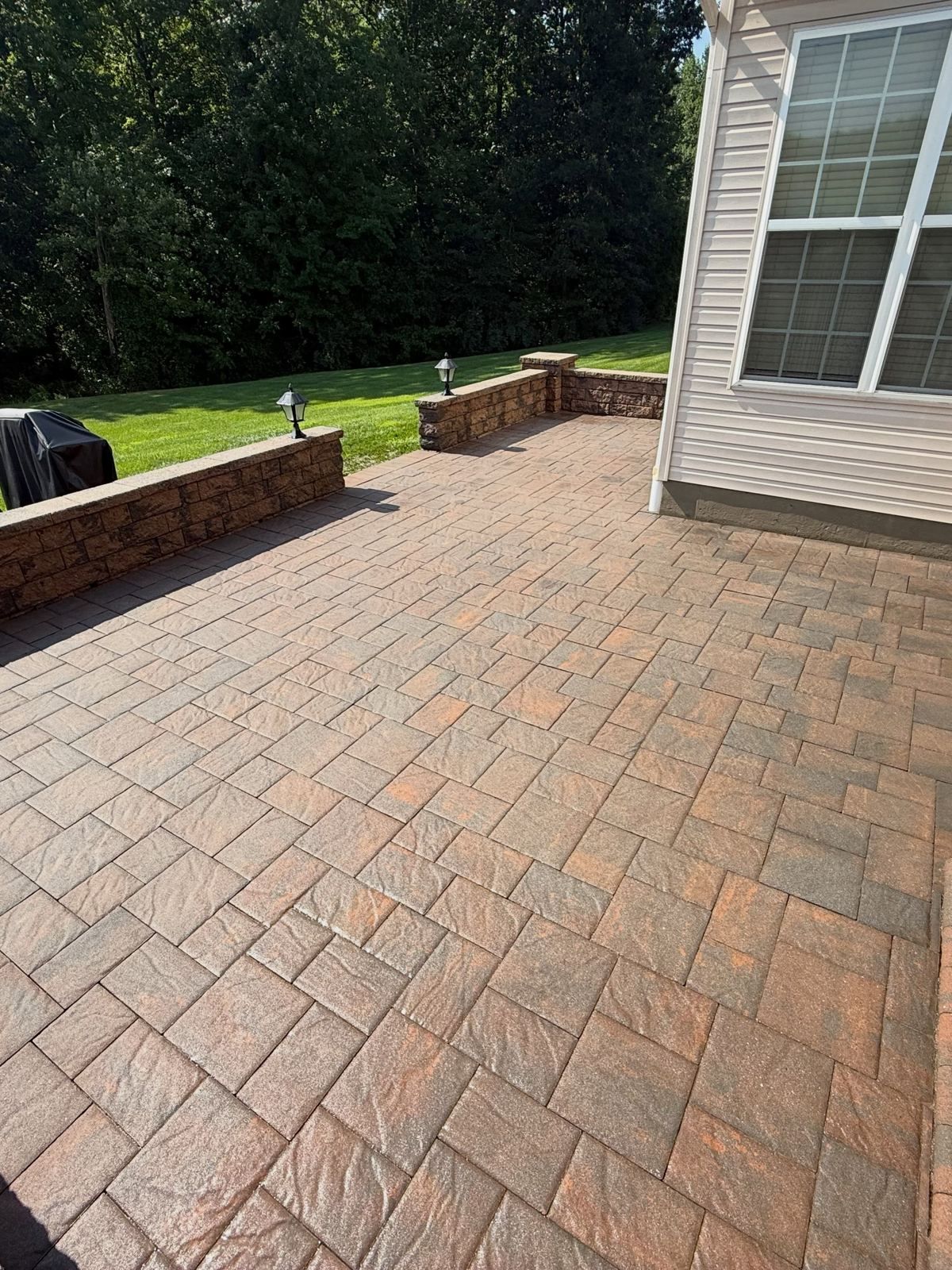
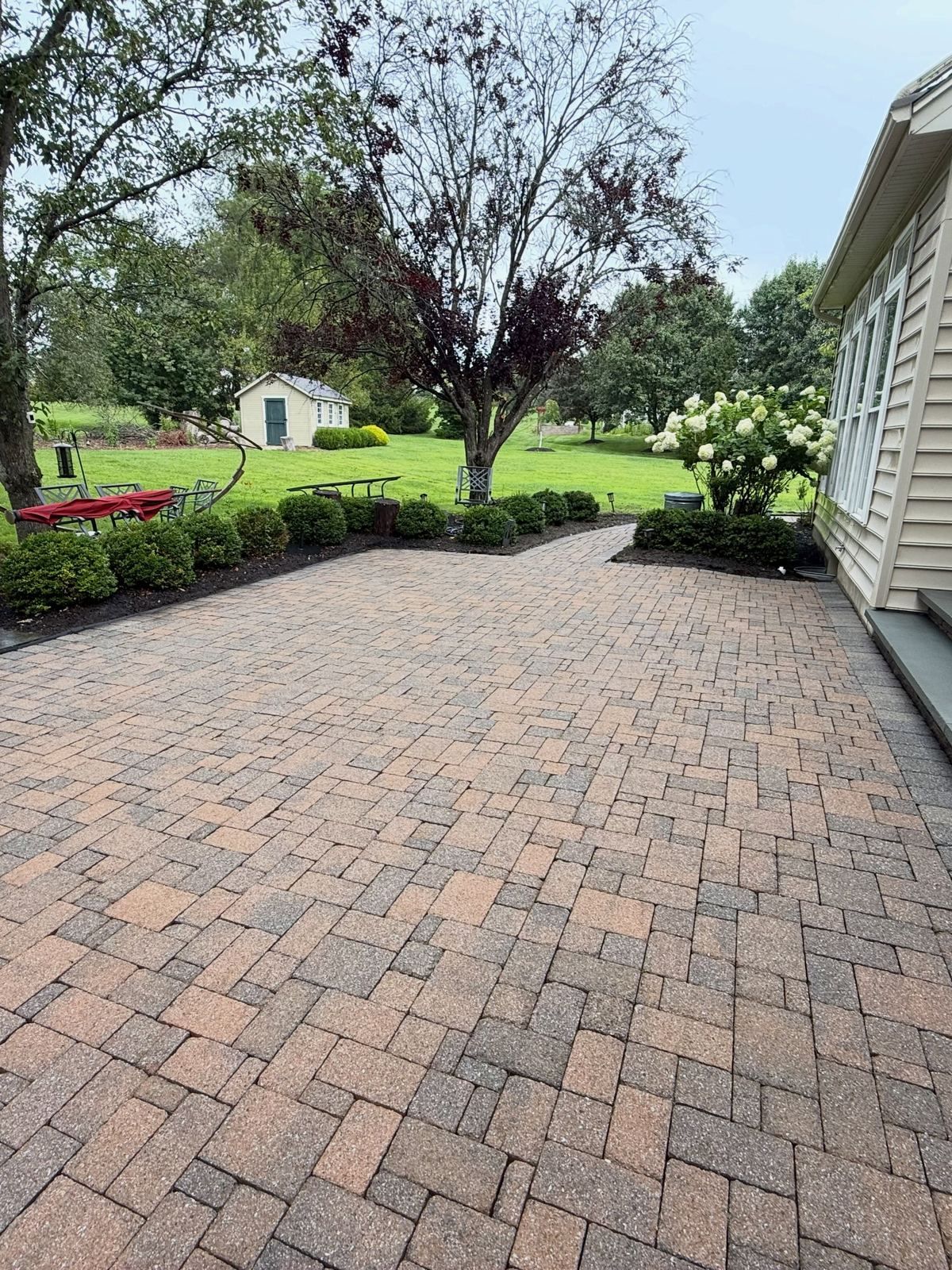
Until the joints are clear, the surface keeps three things to itself: what the edge restraint is doing, how deep and how wide the joints actually run, and whether there is old sealer under the dirt. The first two of those decide what gets booked. Paver work runs March to Thanksgiving.
Call or text (732) 718-6268 and tell us roughly how old the surface is.The First One Is a Different Job
Three Things the Surface Is Keeping to Itself
The first two decide whether a re-sand is the right job at all. The third decides how the surface will look afterward. Guessing at either of the first two is how a re-sand ends up sitting on a problem it cannot fix.
What the edge is doing
Interlock is the whole principle: every paver is braced by the ones touching it, and the restraint around the outside is what holds that bracing together. Lose it and the field loosens from the edge inward, joints widen past anything sand can bridge, and the bedding sand starts leaving at that edge as well. The restraint is also the component most often out of sight, because it sits below finished grade, and mulch and turf creep over it a little every year, which makes it the first thing to uncover and the easiest to overlook. If the edge has gone, putting it right is its own question, running from pinning a loose strip back down to rebuilding a border course, and where yours falls gets settled at the estimate before a re-sand is quoted.
How deep, and how wide, the joint really is
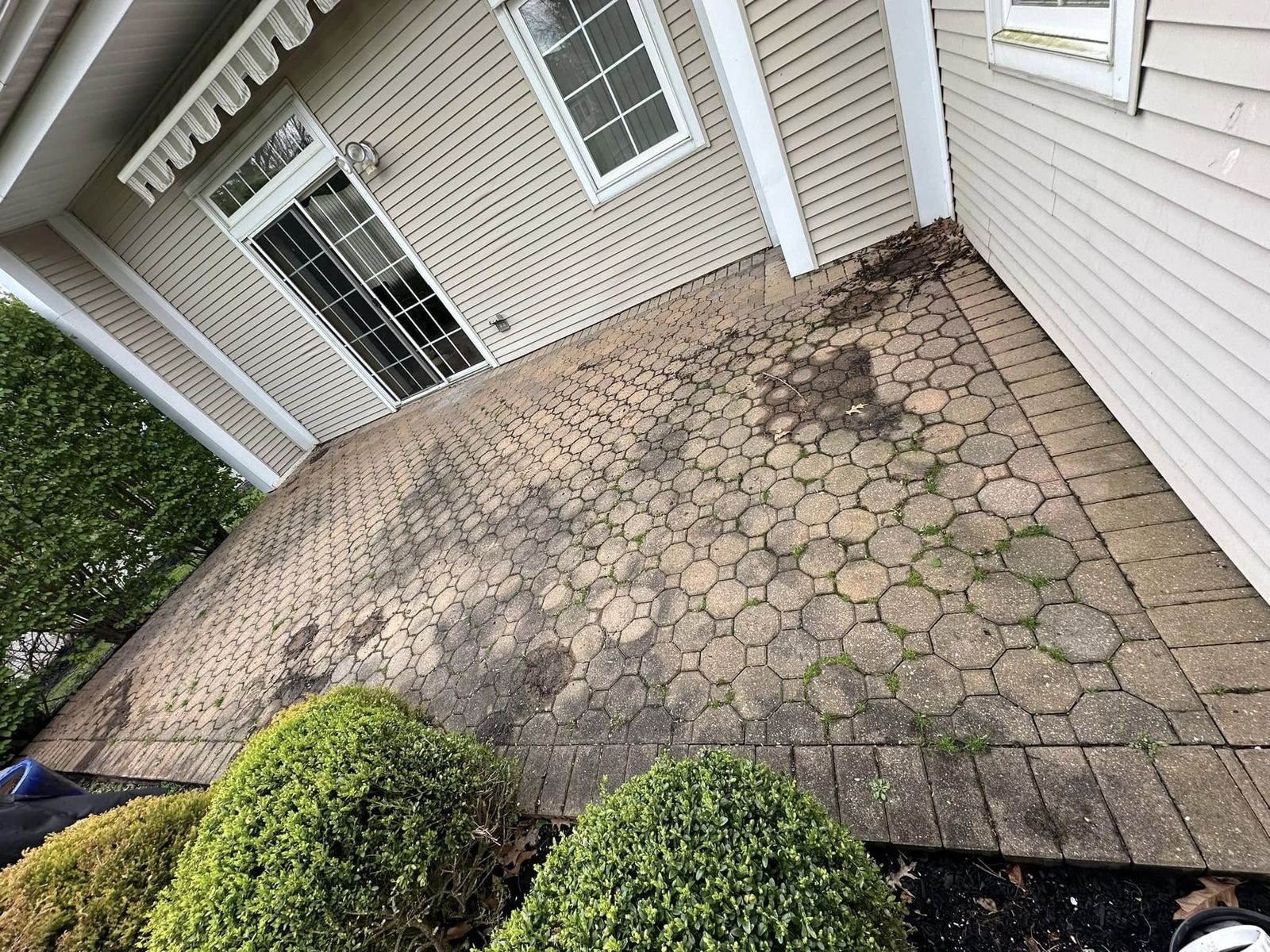
A joint that reads half full can be most of the way empty once the growth is out of it, because what was filling it was the growth. Depth is what sets how much sand goes back in. Width is what sets whether the joint can hold sand at all: a joint that has opened past the width sand can bridge is an edge problem wearing a joint problem's clothes.
Whether it was ever sealed
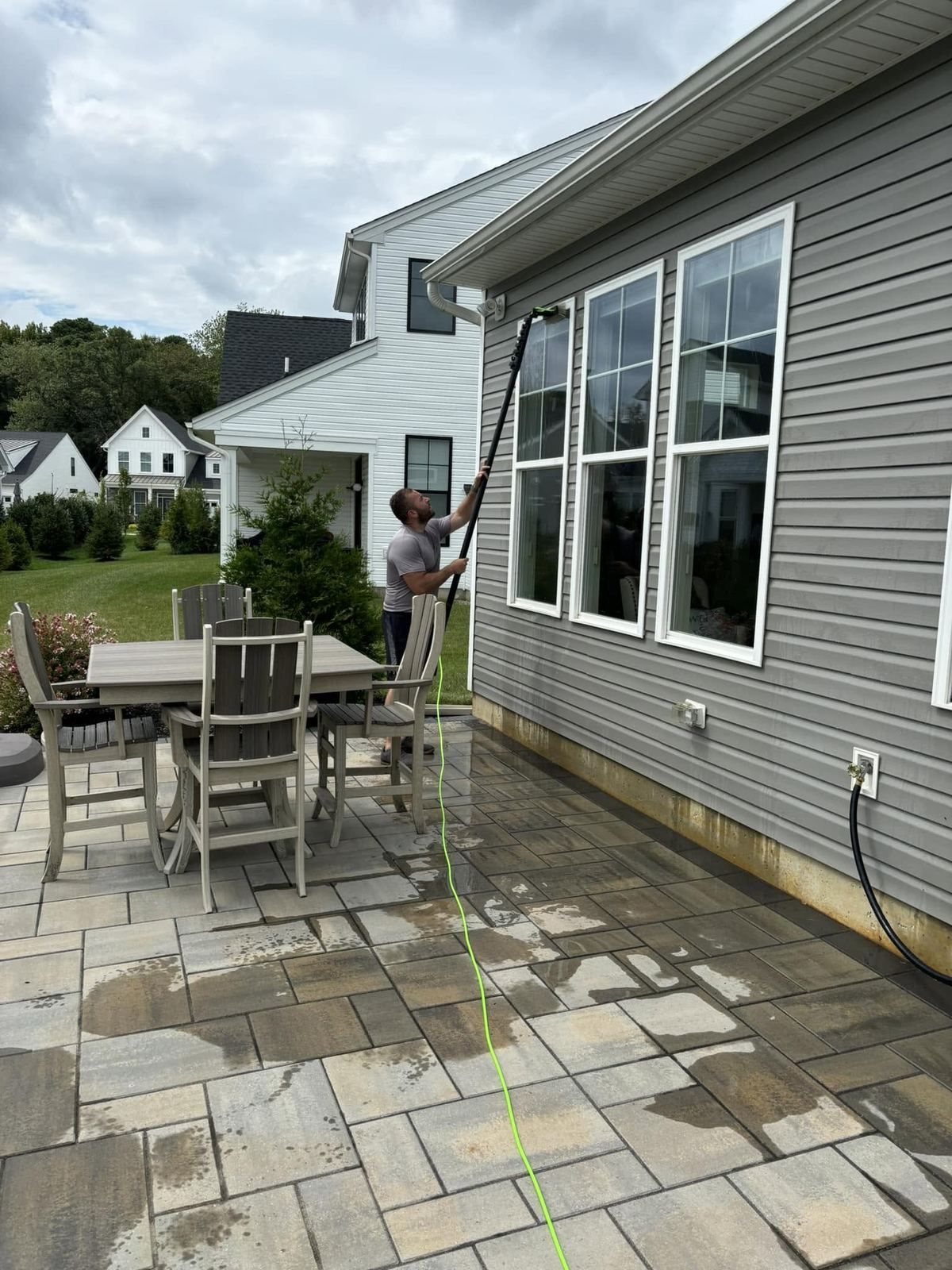
Old sealer that is hazing or flaking has to come off before anything new goes over it, and taking it off is a job of its own. If you are not resealing, it is a question of how the surface will look rather than a step you are forced into. A drop of water that beads and sits there says something is still up there. Water that soaks straight in says less than people think, because a sealer wears through in the traffic lanes first, so water can bead in one spot and soak straight in a foot away. What is actually left, and whether it has to come off, is one of the things the first cleaning answers.
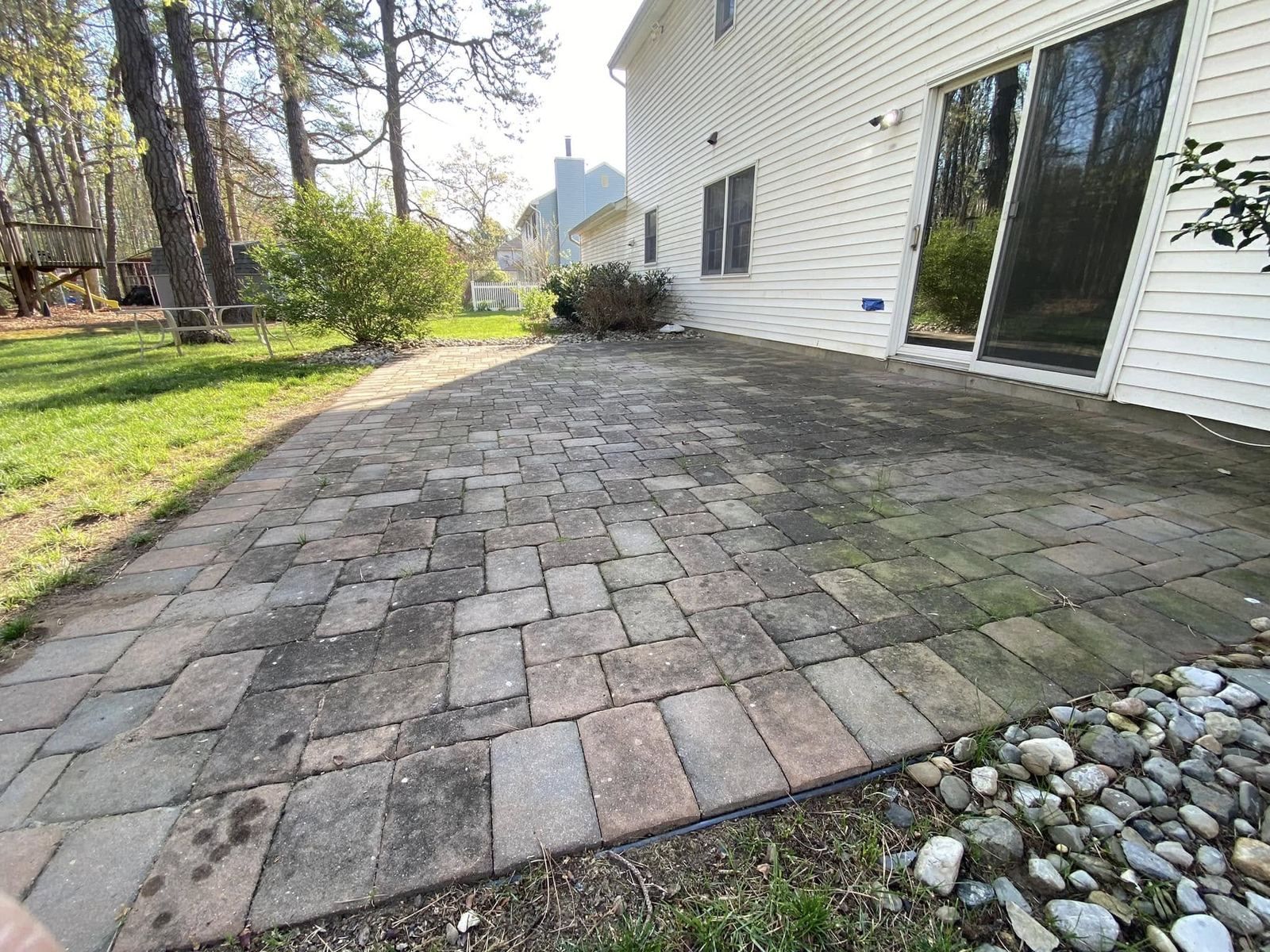
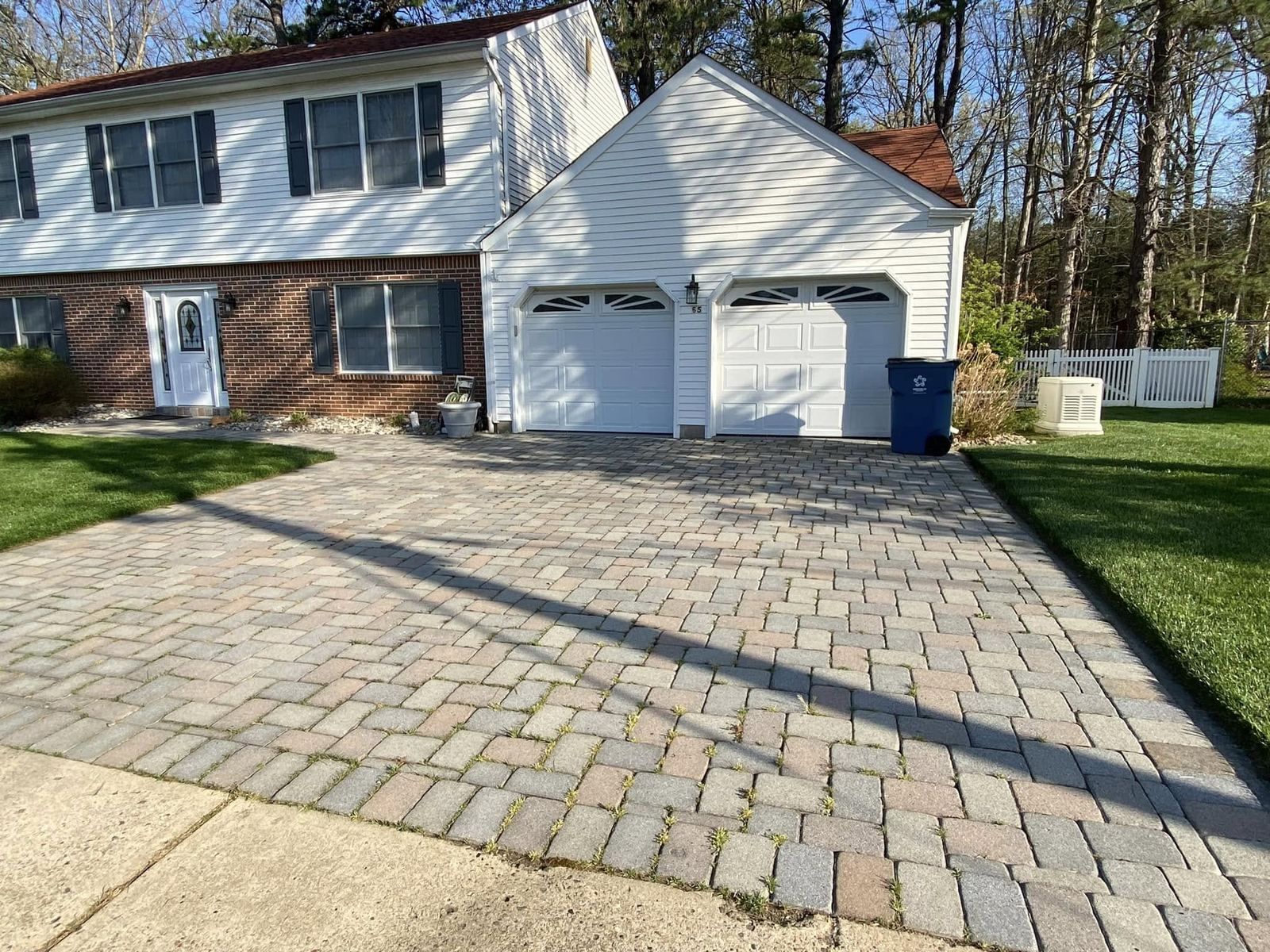
Whatever the estimate turns up is on the quote before anything starts. If something only shows once the joints are open and it changes the job, we stop and get you a revised number before going further.
Reviews
A Customer, on a Patio
From a Google review (Joseph D, 2025): Back for a second job.
“Used Angelo for a second time to clean up front patio and some landscaping - excellent service once again.”
Joseph D, Google review
Read this review on Google →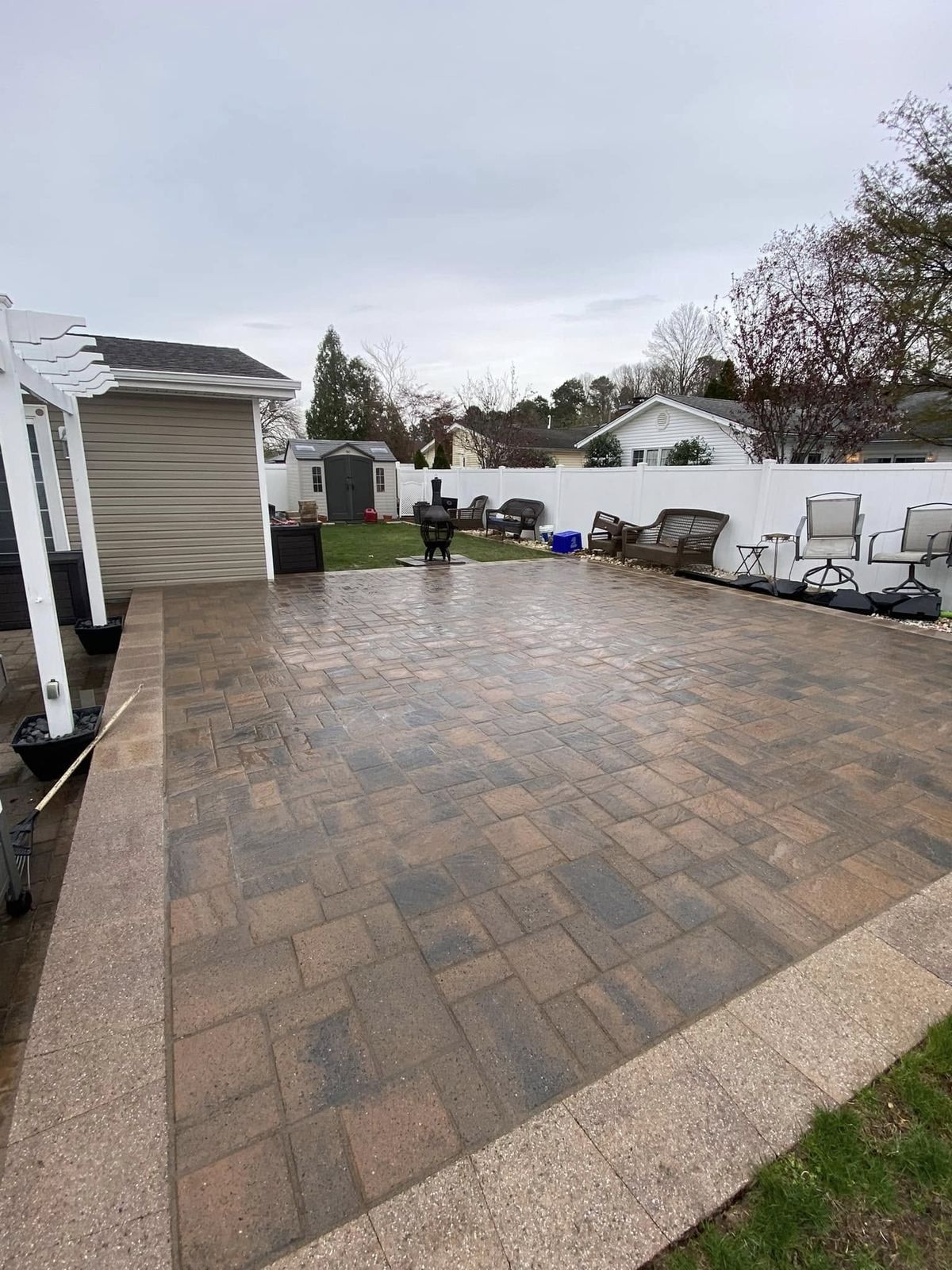
The Work
What Comes Out of a Joint, and What Has to Go Back In
The growth comes out first, and how thoroughly it comes out is the difference between a job that holds and one that does not. Weeds in a paver joint are almost never rooted in the base under the pavers. They are rooted in the joint itself, in years of windblown dirt and broken-down leaf litter that has turned the gap into a planting bed. Kill what is on top and the bed is still there. The exception is what creeps in laterally from a lawn or a bed at the perimeter, which is why we want a photo of that line.
So the joints get cleared to depth and the surface gets cleaned. Once the joints are dry through, polymeric sand goes in dry, gets worked down into them, and the excess is swept clear of the paver faces before any water touches it, because sand left sitting on the faces is what sets there as haze. Only then does it get watered, in stages, so it sets in the joint.
Worth knowing before you book
Asked at the Estimate
Two Questions We Get at the Estimate
Can you do the driveway now and the patio in the fall?
Yes, and plenty of people do, as long as the second one lands inside the paver season. The thing to know is that the two will not look identical for a while, because the one restored first starts picking dirt back up before the second is finished. How quickly that happens depends on sun, trees, and traffic.
Does sealing have to happen at the same time?
No, and it does not have to happen at all. Sealer goes over a clean, dry surface, so the cleaning has to be fresh when the sealer goes on. Seal later and the surface gets cleaned again first.
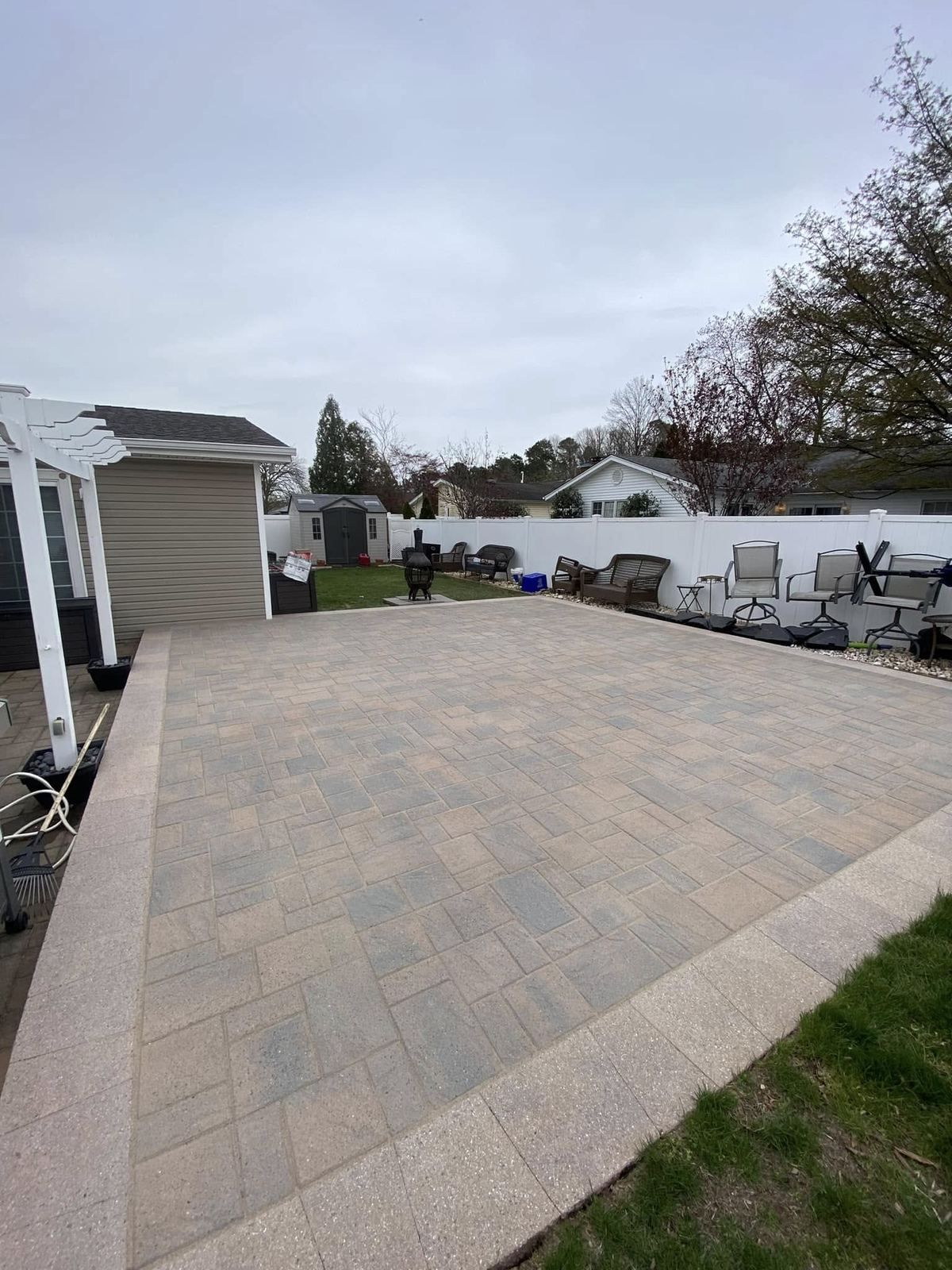
Get a Free Estimate
Walk the Perimeter Before You Call
Take two minutes and follow the outside edge of the surface all the way around. The restraint itself you will probably not see, because it sits below grade. What it has been doing you often can: whether the outermost row still sits level with the rest of the field, whether any of it has slid outward, and whether a gap has opened between that last row and the lawn or the bed. Tell us what you found and we will know what to bring.
Serving Monroe Township, NJ 08831. Paver work runs March to Thanksgiving.