
Deck Restoration in Colts Neck, NJ
Floor, Rail, and Stairs | Wood Stained, Composite Cleaned | Free Estimates
People talk about a deck as though it were one surface. It is three, and they age at three different rates on the same structure.
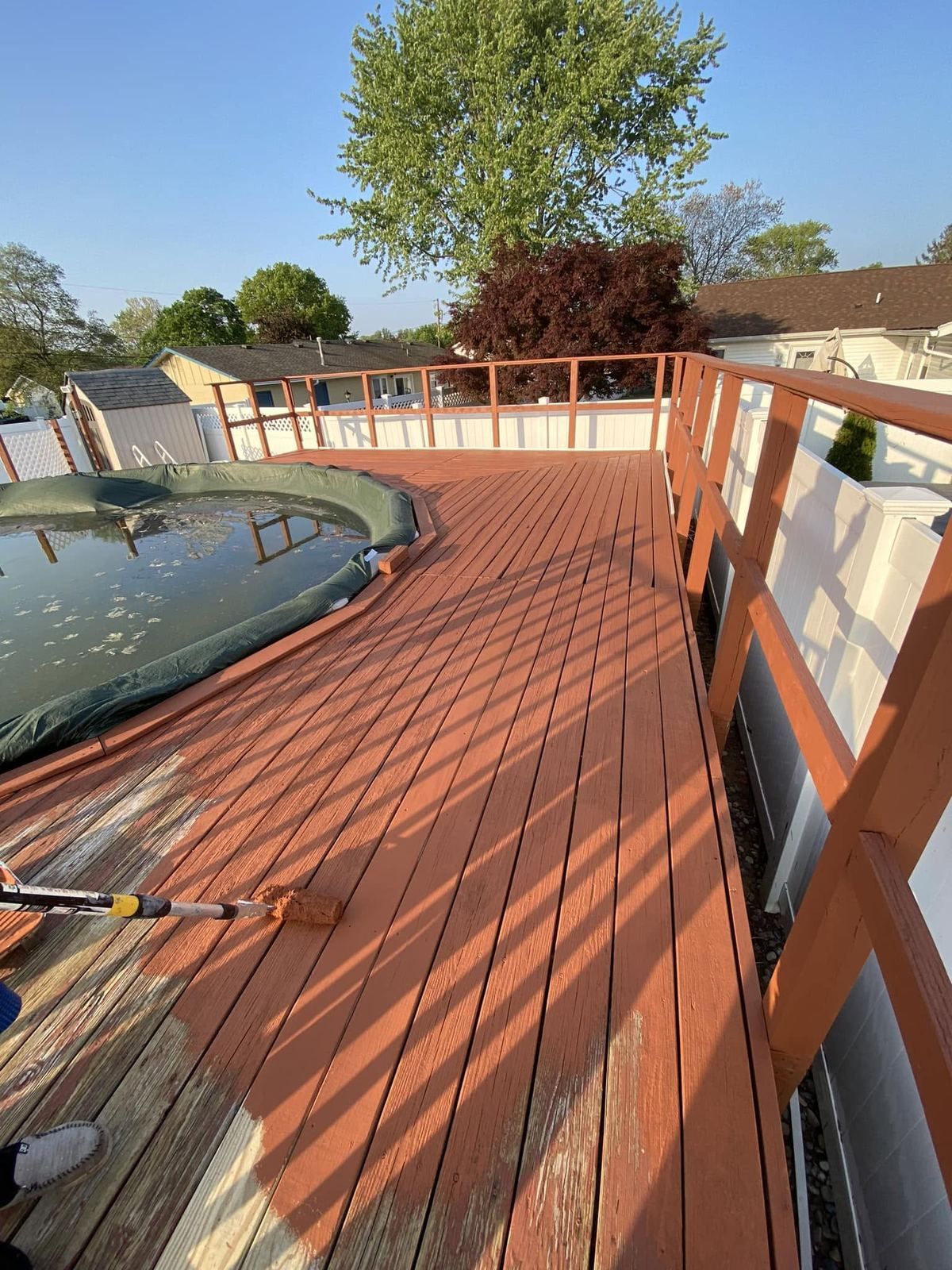
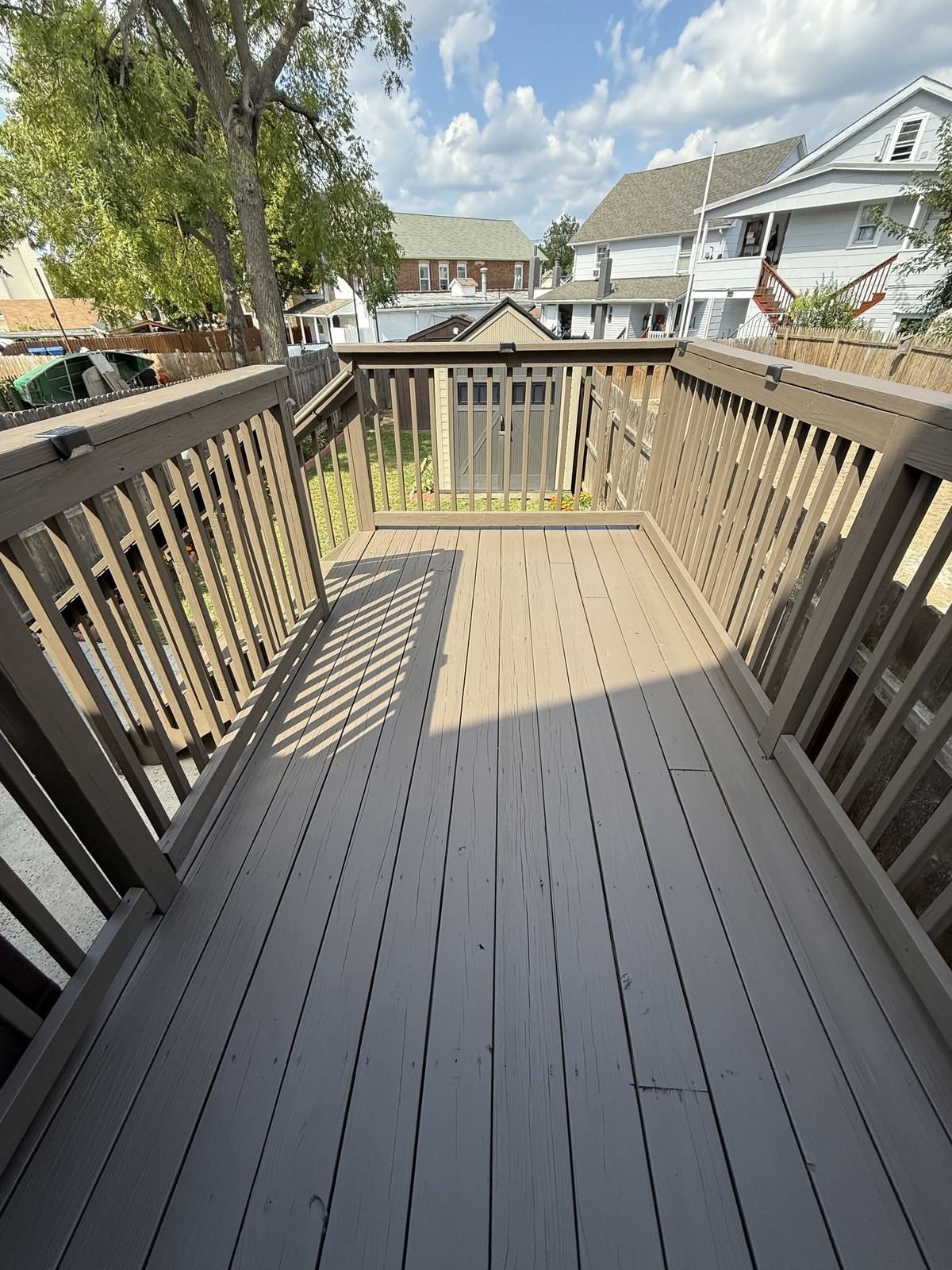
A photo of the deck and one taken along the top of the rail.
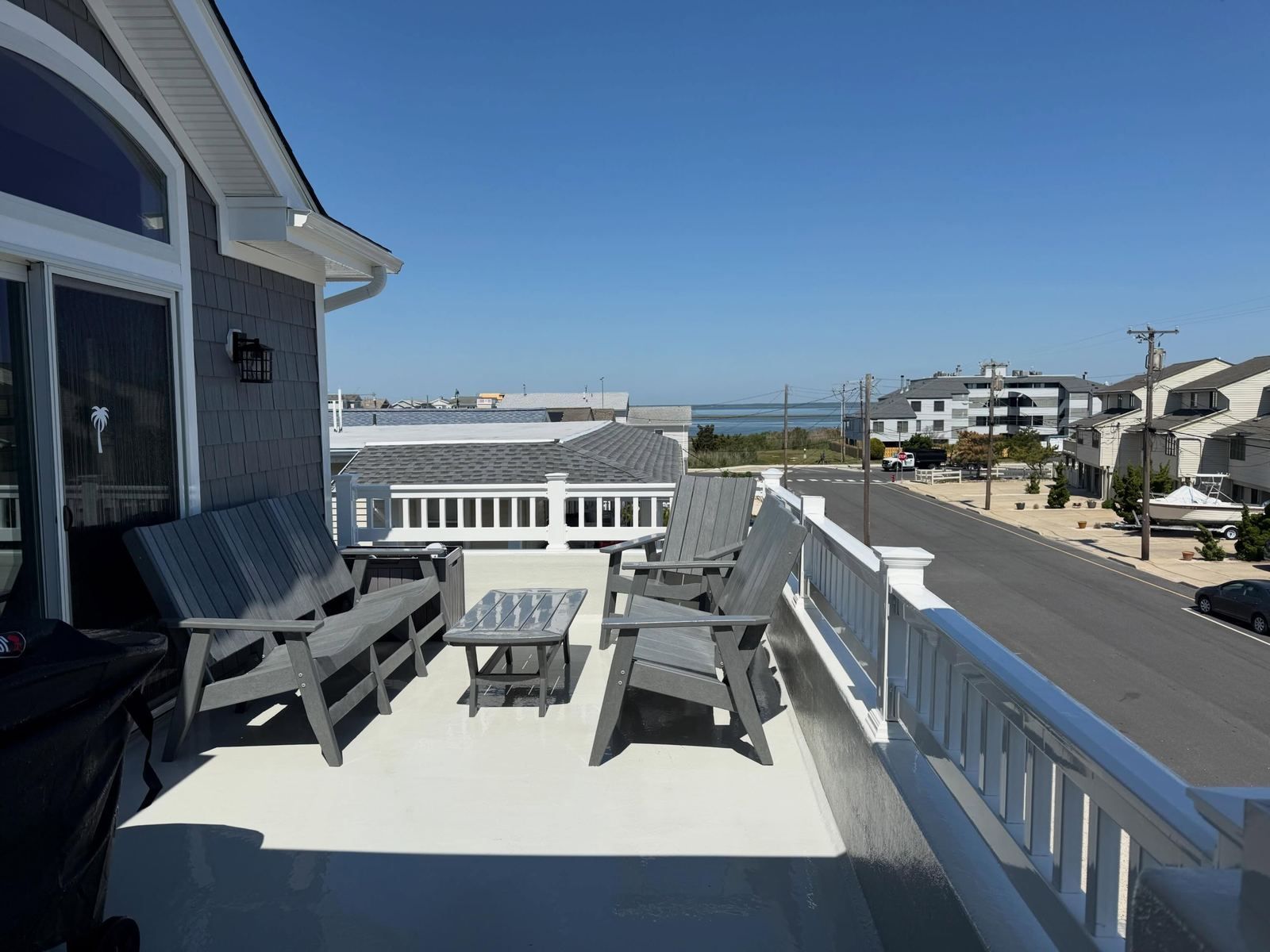
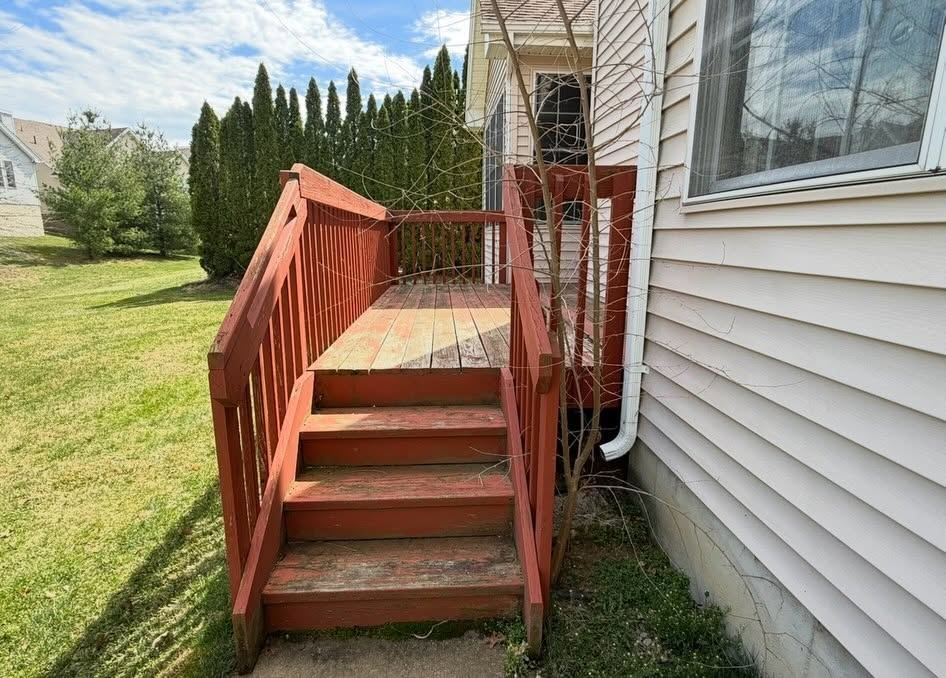
The floor takes the traffic. The rail takes the weather with nothing over it. The stairs take both, end-grain first. Most of what an estimate settles is which of the three has actually worn out.
Call or text (732) 718-6268 and send the photos with it.Three Surfaces, One Structure
They Do Not Wear at the Same Rate, and the Deck Decides Which Goes First
The floor
Horizontal, so every board face holds water until it evaporates, and it takes every footfall. It is also the surface people judge the deck by, which is why a floor that has gone gray reads as a deck that needs everything. A heavier film on a floor eventually peels where a thinner one would simply wear, so the walking surface usually wants a penetrating finish.
The top of the rail
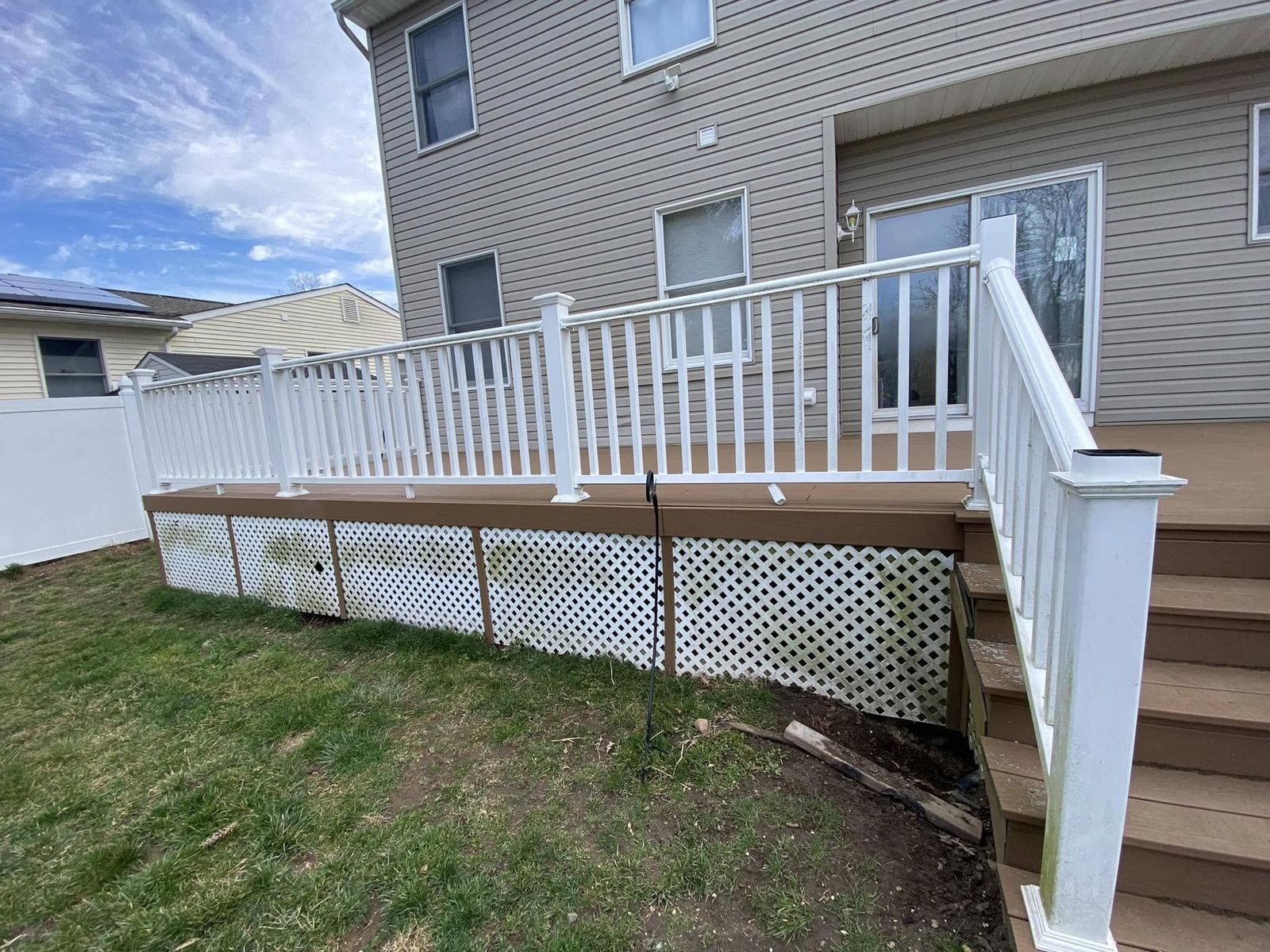
Horizontal as well, and that is the part people forget. A rail cap holds water exactly like a floor does, takes the same sun, and has nothing standing over it at any hour. On a lot of the decks we look at, the rail cap is further gone than the floor, which surprises people, because you look along a rail rather than down at it.
The stairs
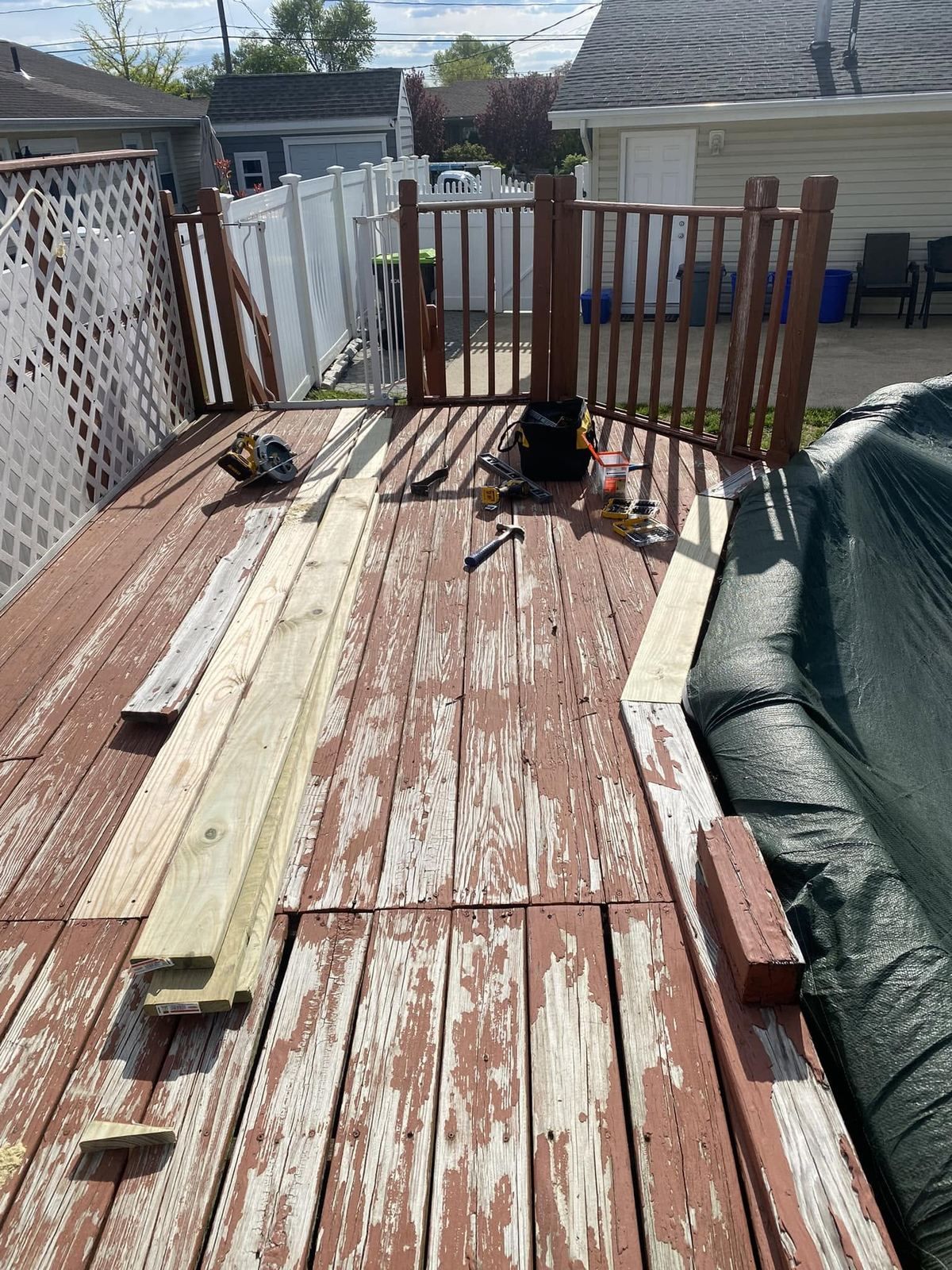
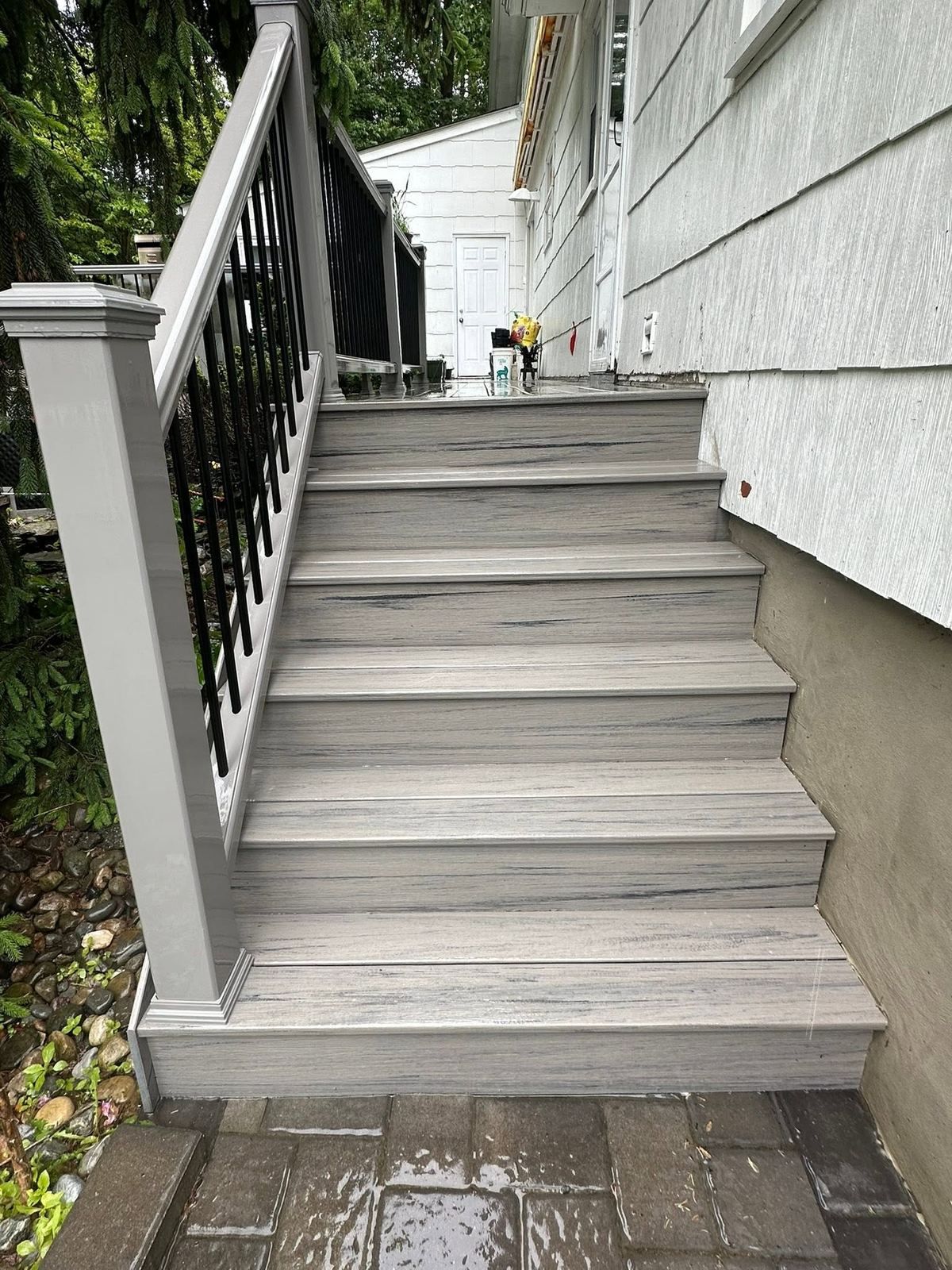
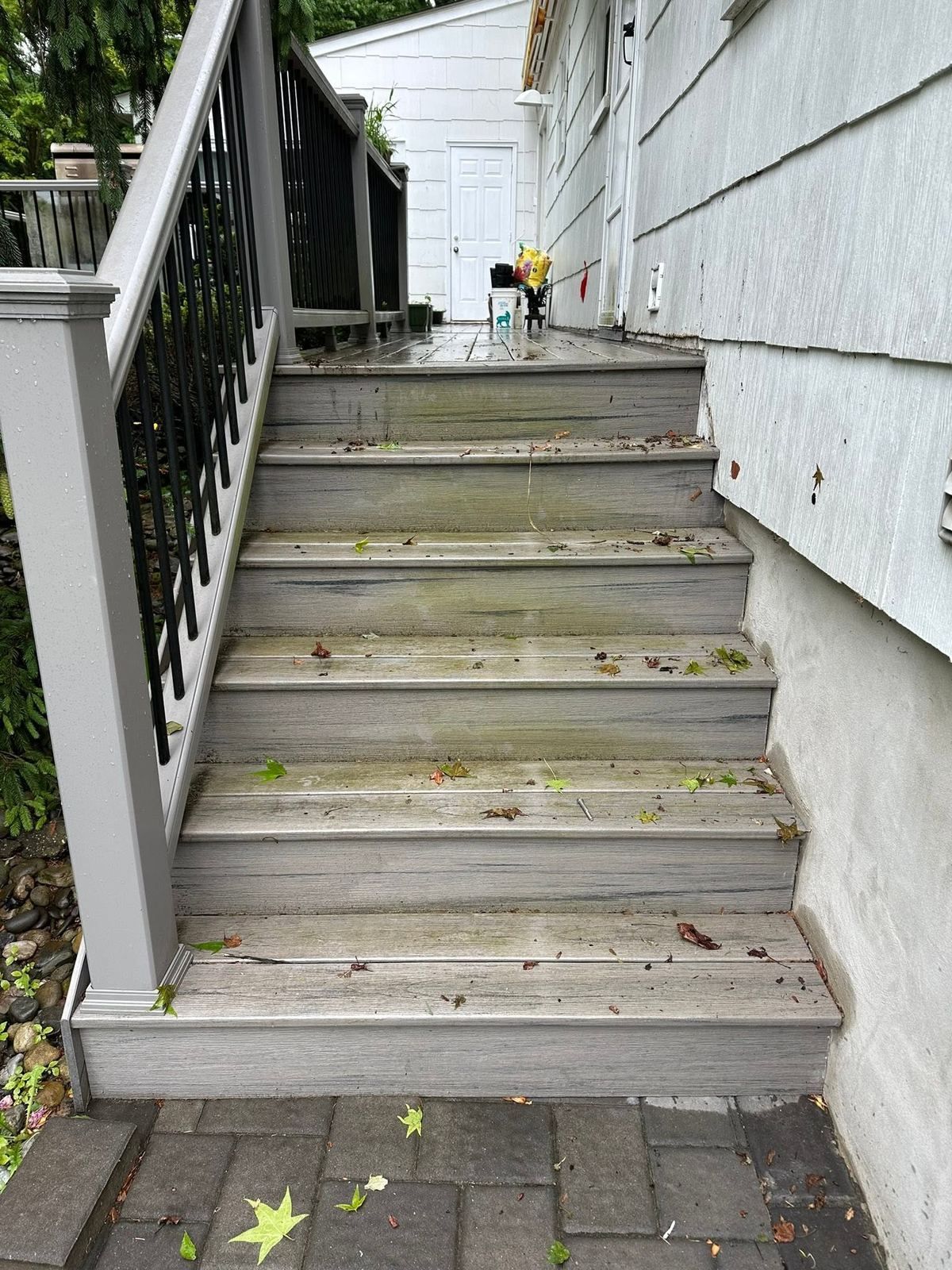
Every tread is a floor with two cut ends exposed, and end grain drinks water many times faster than a face does. Add traffic concentrated into a strip a foot wide, and stairs are where a deck usually shows its age first in a way that matters underfoot.
The Work
Why a Deck Is Not a One-Visit Job
A deck is washed at controlled pressure, closer to siding than to a driveway. What lifts the gray is the wood-cleaning solution, and the pressure behind it stays low enough that the water is carrying the work off the board rather than cutting into the wood. Brightening, drying, and sanding follow, in that order and for reasons the deck restoration page goes into. What that means in practice is that the drying sits in the middle of the job and cannot be compressed, so a deck is rarely a same-day visit from start to stain.
Rails and stairs are normally done along with the boards, though they do not have to be. Anything that has to come out is agreed with you first and written on the quote.
Worth knowing before you book
Questions We Get
Before Anyone Comes Out
The rail is worse than the floor. Do we have to do both?
No. Rails can go on their own schedule, and on a deck where the rail and the floor are visually separate that is a sensible way to run it. Where the two meet in the eye, doing one and leaving the other shows, so it is worth deciding on purpose.
The treads feel soft at the front edge.
Soft is a structural question, not a finish one, and no stain will change it. It rarely stops at the tread either, because whatever has been wetting the front edge has usually been wetting what is underneath. The stringer under that step is what Angelo goes looking for, and what he finds there is what the conversation is about.
Composite deck, wood rails.
Two jobs on one structure, quoted as two. The composite gets cleaned and left at that; the rails get the full treatment. Either way the work follows the weather rather than the calendar, because the wood has to be dry before stain goes on and the temperature has to sit inside what the product allows. Angelo will tell you at the estimate whether the date you want works.
A Review
A Customer, Briefly
From a Google review (Stan Chorney, 2024): Plainly put.
“Very nice guy. Did a very nice job.”
Stan Chorney, Google review
Read this review on Google →What Changes it Here
Where a Deck Backs Onto Preserved Farmland, the Exposure Is Likelier to Last
Colts Neck has put nearly a thousand acres into formal farmland preservation. That matters to a deck for a reason that has nothing to do with the view. Sun exposure is usually a moving target. Something goes up or gets planted next door; it fills in; and the afternoon comes off your rail without anybody having decided it should. Where a deck here backs onto preserved farmland, the ground behind it does not sit under the same rules as an ordinary back lot, because a deed of easement runs with the land. It is not frozen, and it would be wrong to say it was. A farm can still put up a barn, and it can plant an orchard or a windbreak; some easements keep a right to a farm dwelling; and your own trees go on growing regardless. What it makes unlikely is the one change that alters a deck's light fastest, which is the parcel behind you filling with houses.
So where that preserved ground lies west or south of a deck, the afternoon it opens up is likely to stay open, and on those decks the surfaces that take sun flat, the rail cap and the top step, generally run out of finish before the floor does. Under a tree line it tends to run the other way, because the floor holds leaf litter and stays damp long after rain. Angelo's interval on wood is five or six years either way. Which of those two decks you have decides which surface calls the visit, and if you are not sure whether the ground behind you is preserved, the county maps it.
A photo will show you which kind of deck it is. What a photo will not show is how far the rail cap has already gone, and that is the thing the visit is actually for.
Get a Free Estimate
Start With the Rail, Not the Floor
Stand in the yard and photograph the whole deck. Then get your eye down to rail height and take another one along the top of the cap. The second one is where the surprises are.
Serving Colts Neck Township, NJ 07722, from Freehold next door.