East Brunswick, NJ

Deck Restoration in East Brunswick, NJ

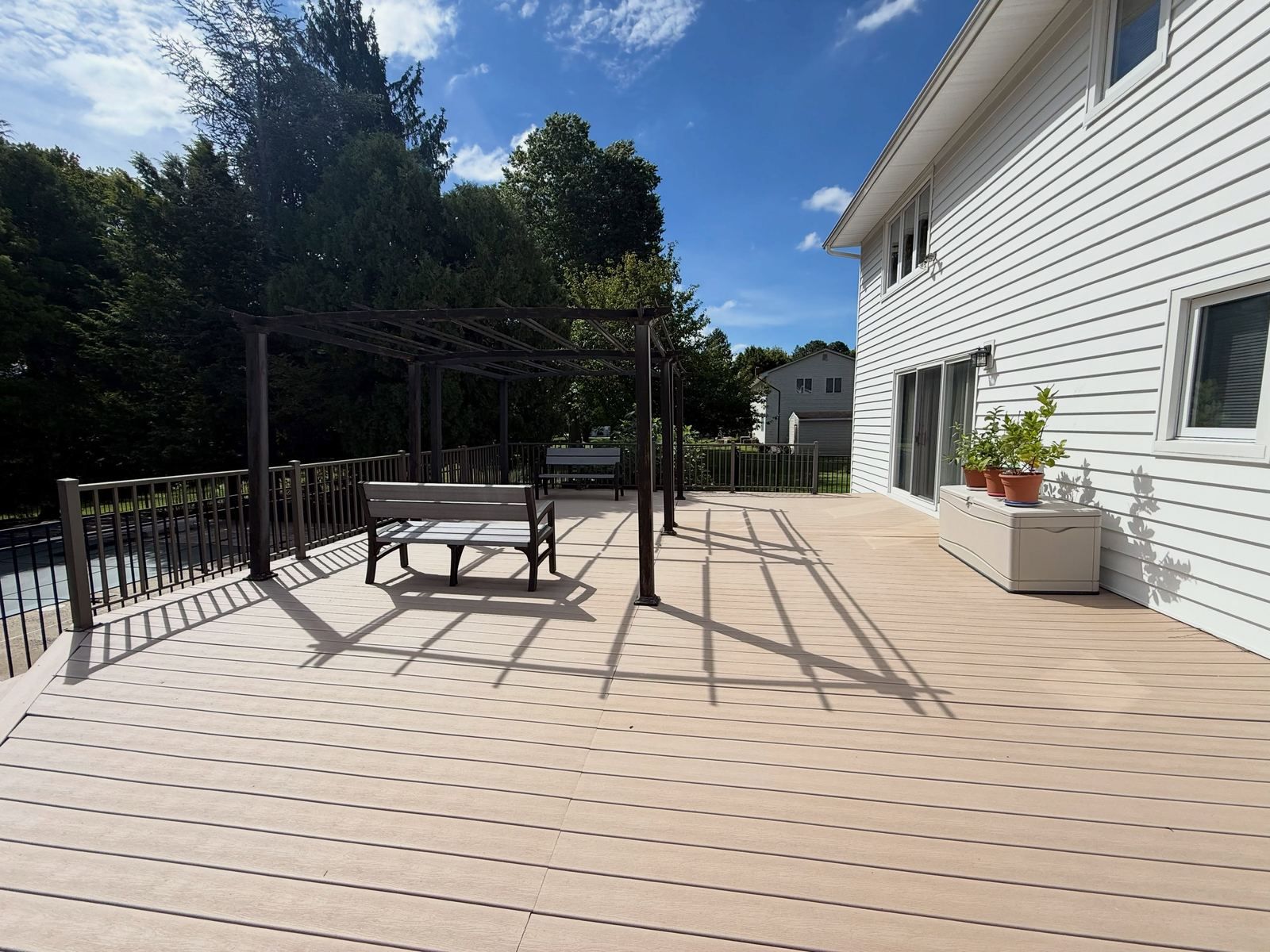
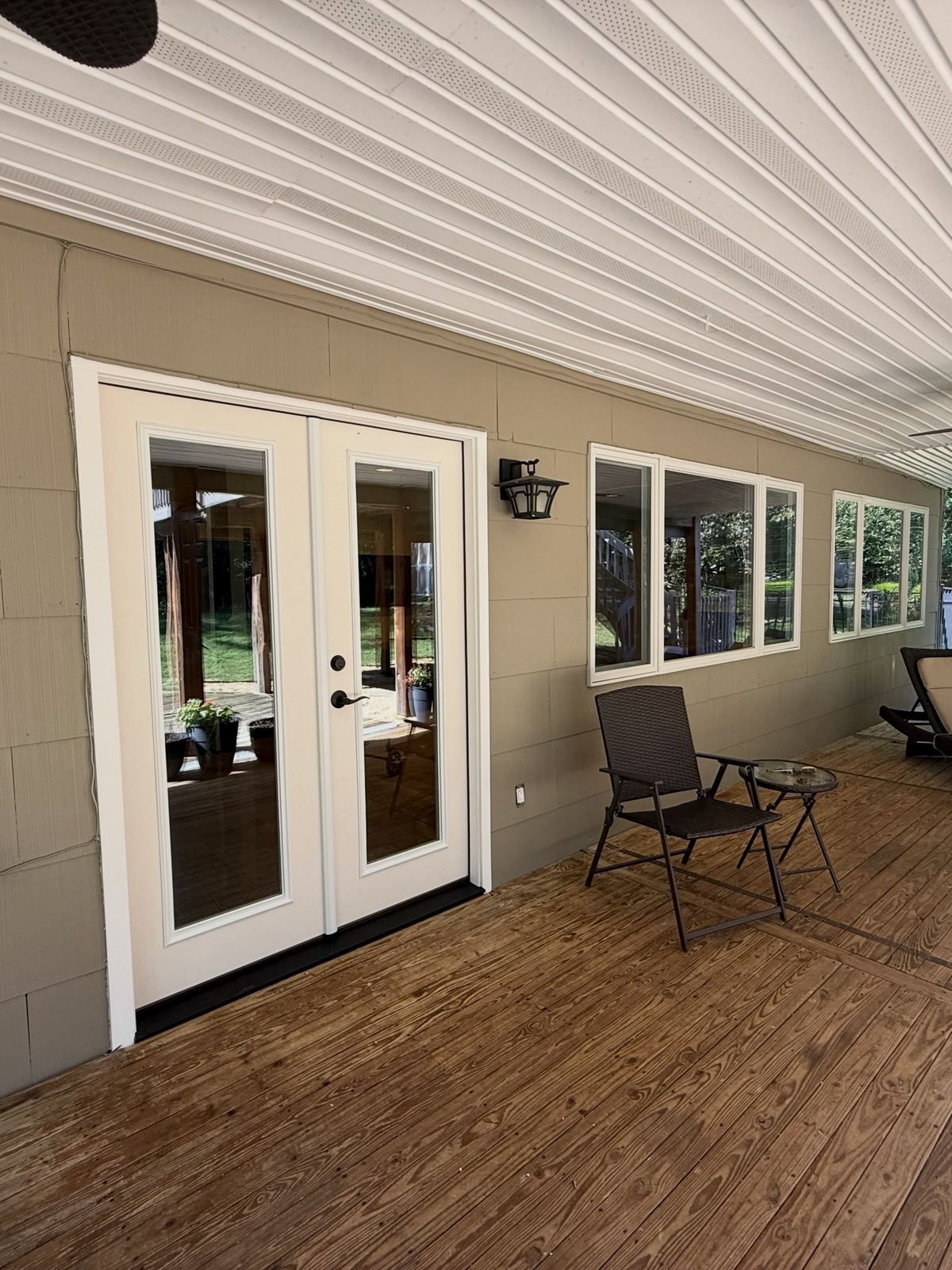
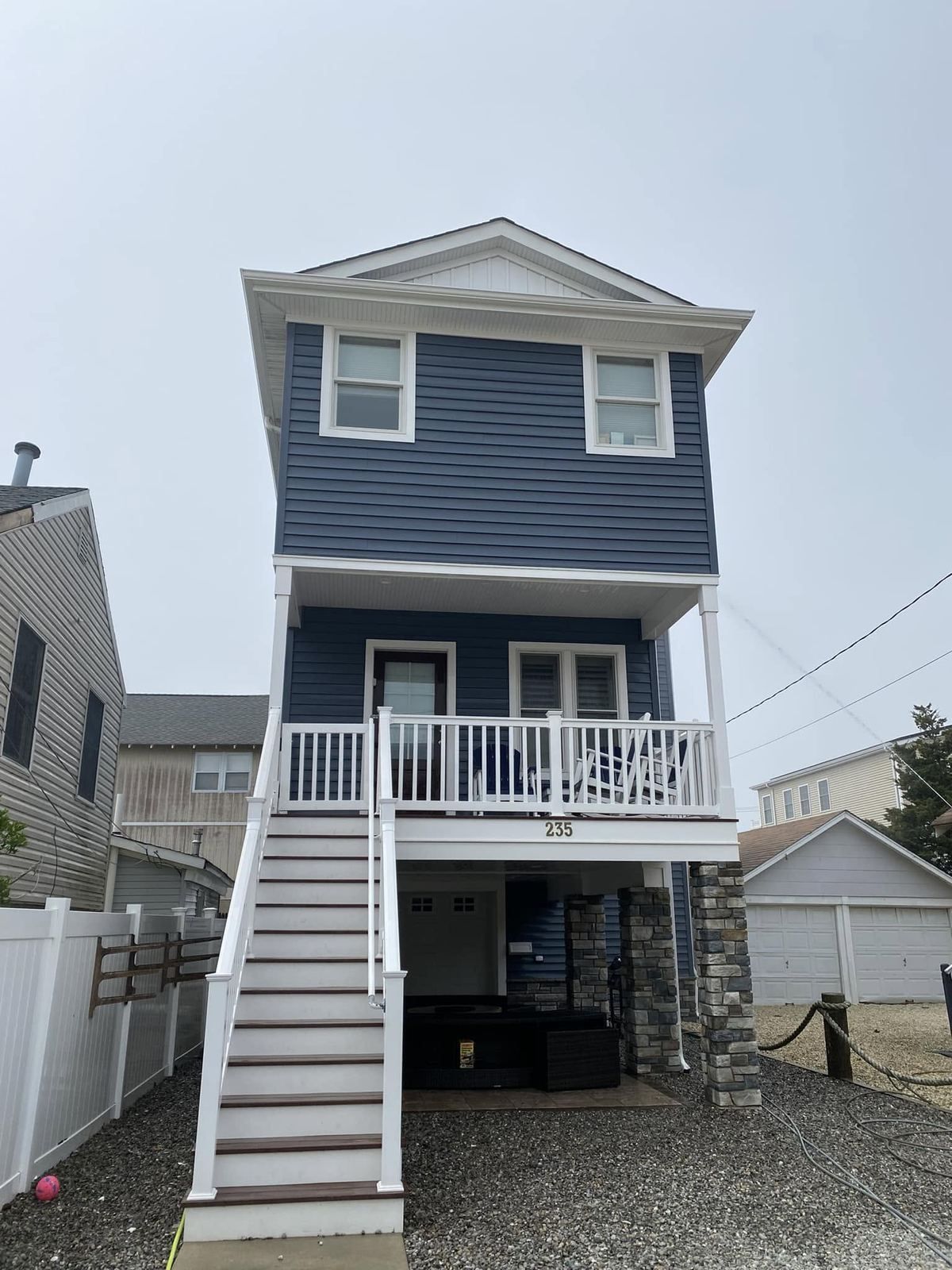
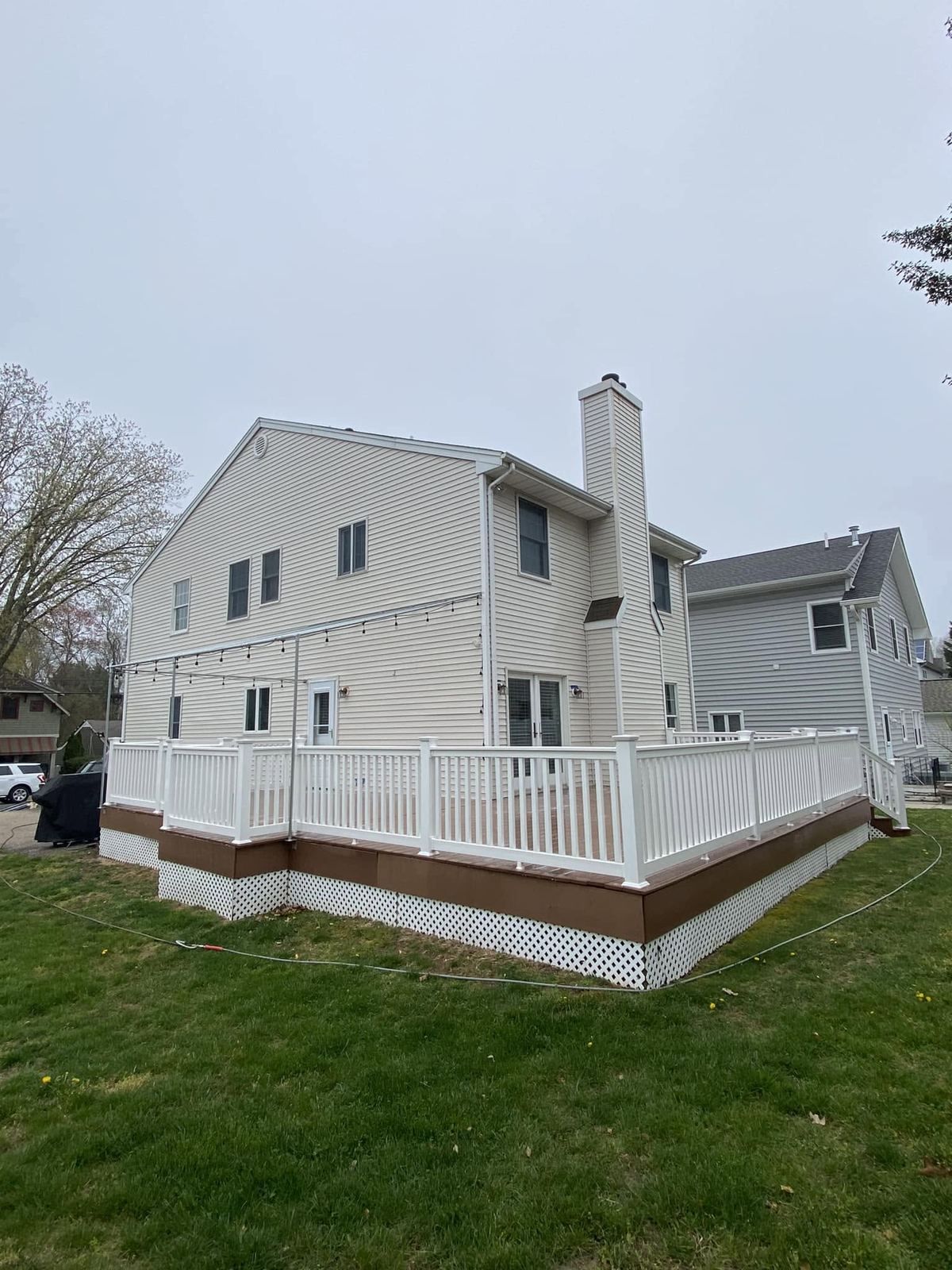
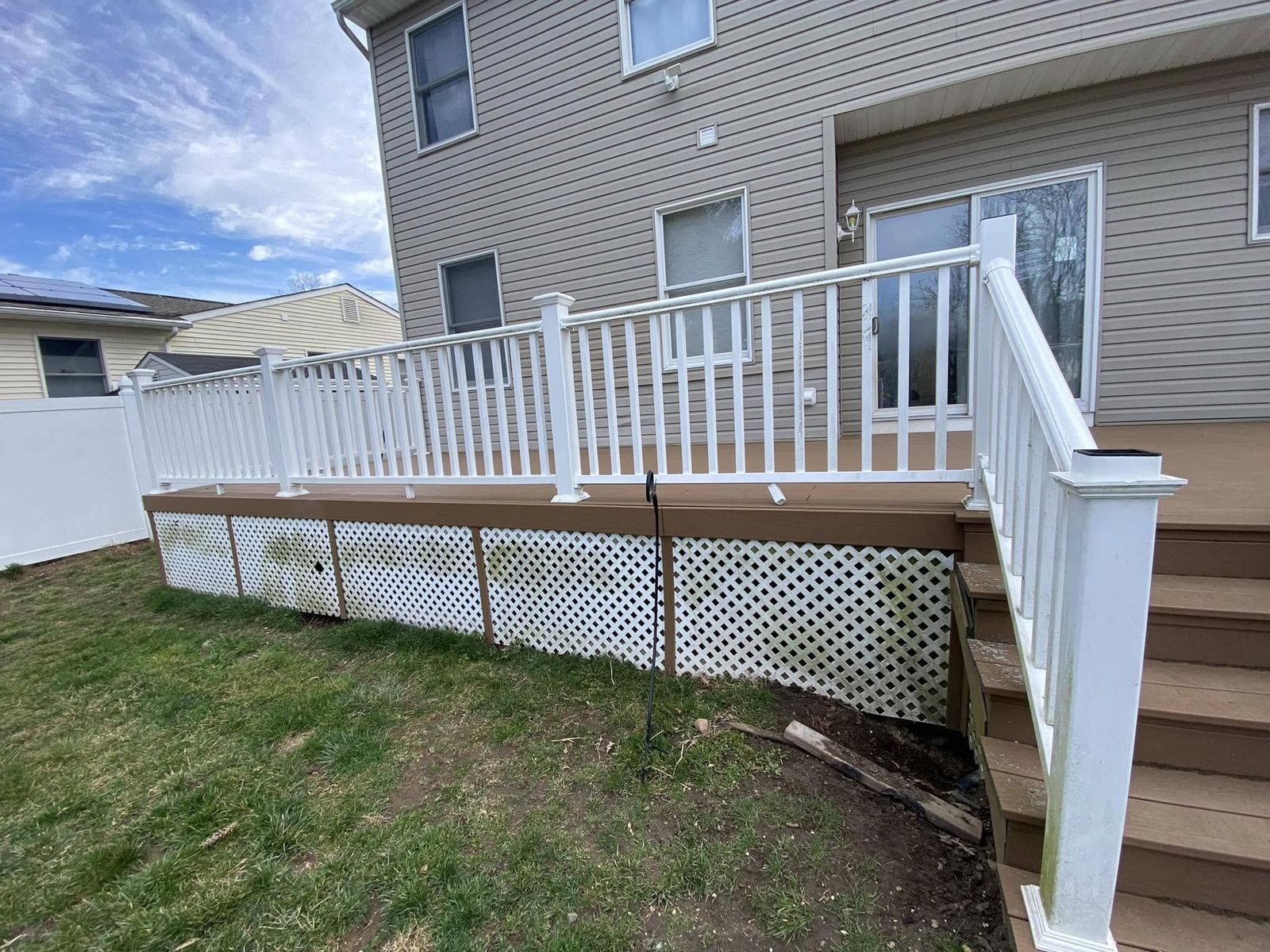
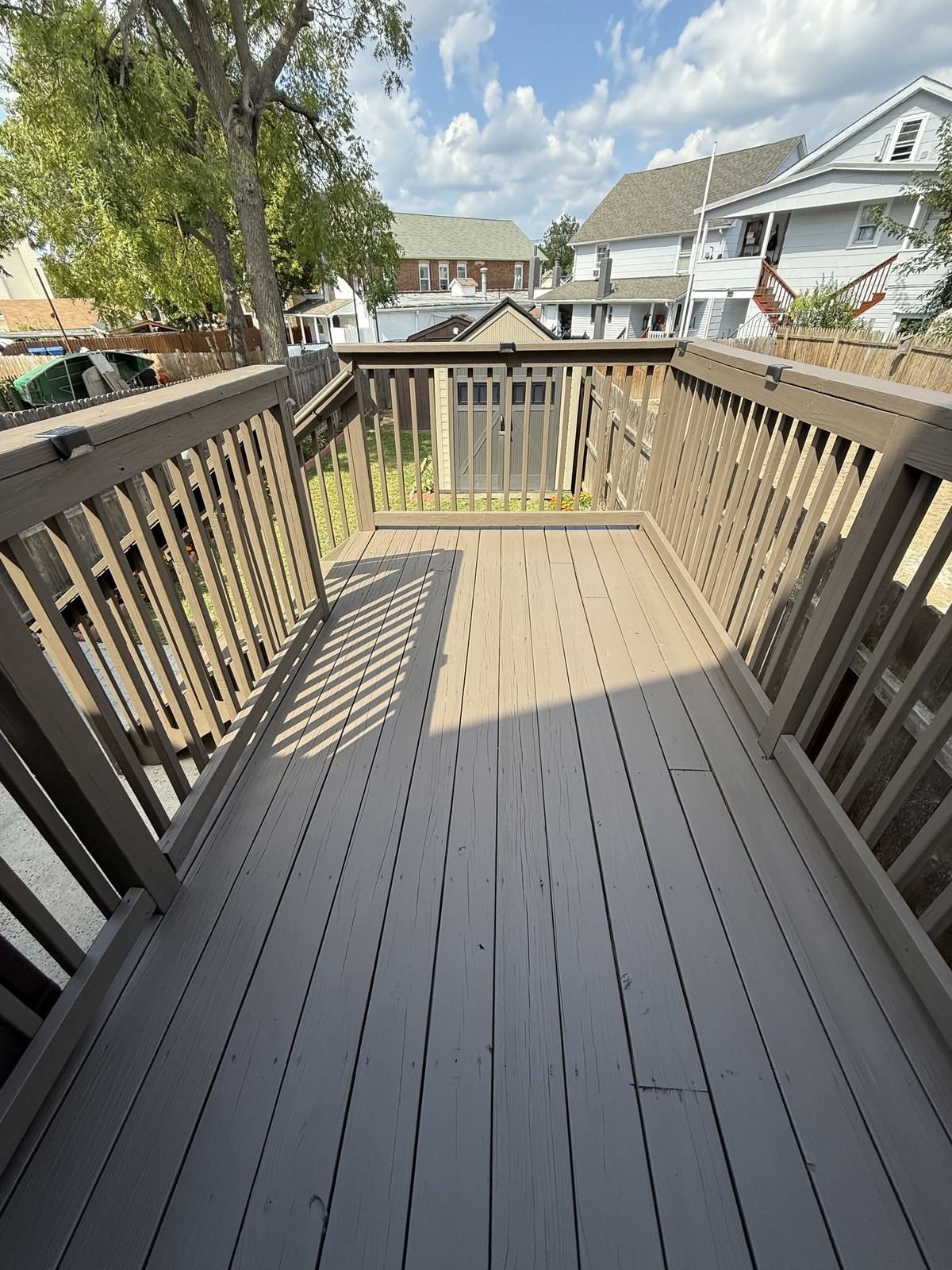
Deck restoration is a complete refinishing process that returns a weathered deck to a clean, smooth, protected condition without the cost and disruption of replacement. It begins with a careful power wash calibrated to the decking material, continues with sanding to remove raised grain and failed finish, addresses loose railings, popped fasteners, and damaged boards, and finishes with multiple thin coats of stain or sealer formulated with UV inhibitors. Wood, composite, vinyl, PVC, and cedar decks across East Brunswick, NJ, all weather in the same climate: humid summers that grow mold and algae on shaded boards, autumn leaf fall that stains the surface, and winters whose freeze-thaw cycles open the grain and lift the finish. Restoration reverses that wear and adds years to the deck's life.


Choosing professional deck restoration in East Brunswick, NJ, protects the structure as well as the surface. High pressure applied to softwood decking raises the grain into a fuzzy, splintered surface that no stain can hide, and it drives water into joists and ledger boards where rot begins unseen. Stain applied over mildew, over a damp board, or without sanding peels within a season. Professional technicians inspect the framing before any water touches the deck, wash at a pressure suited to the species and condition of the boards, use oxygen-based cleaners rather than harsh bleach to remove organic growth, sand to a stable surface, and apply finish in the thin, even coats that penetrate and last. The result is a deck that is safe to walk on, uniform in color, and protected against the next several seasons.


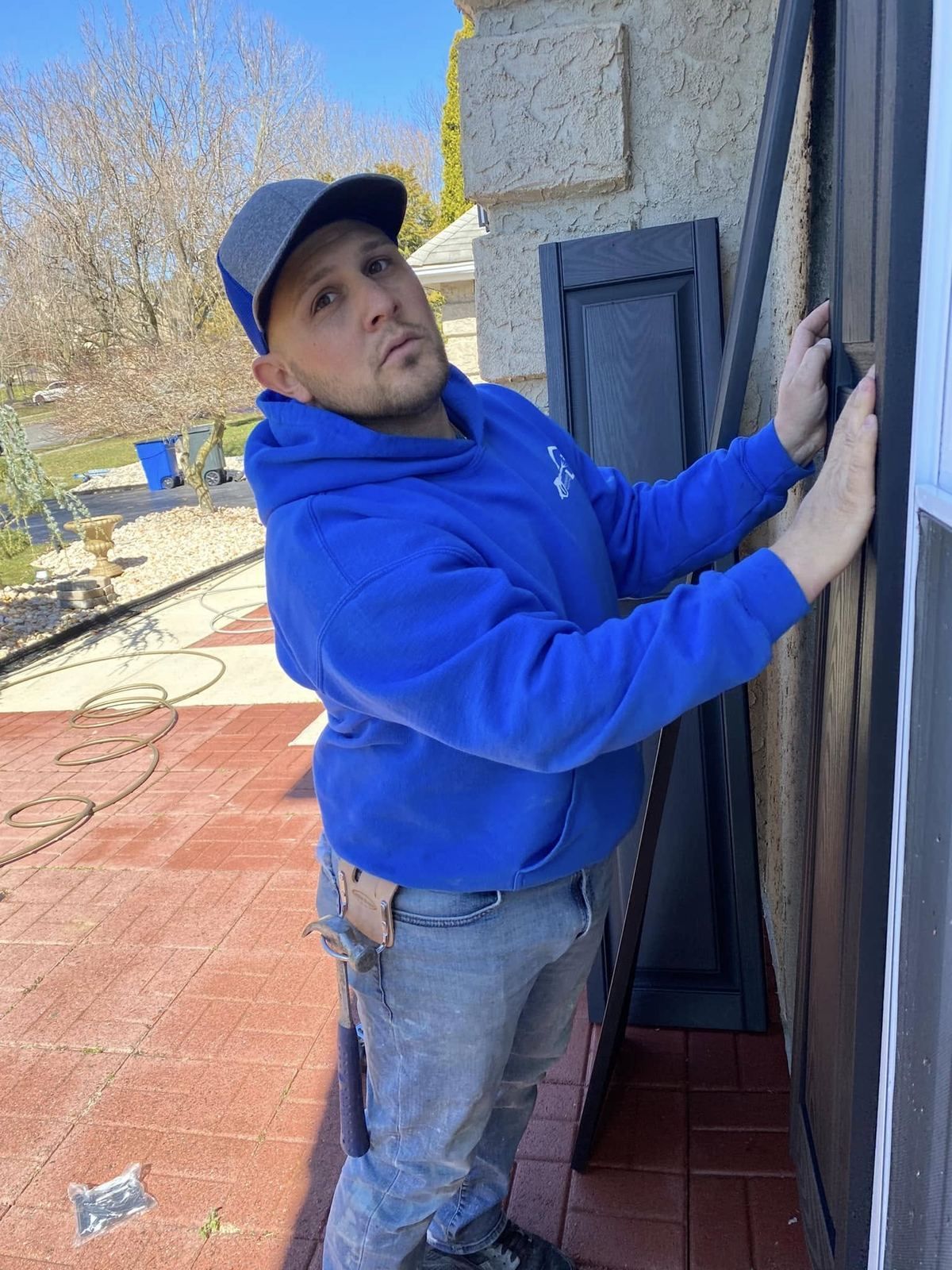
Catanzaro’s Power Washing, based in Monroe Township, has served residential and commercial clients across Middlesex County for several years, building a reputation for careful, thorough exterior restoration. We specialize in professional deck restoration as part of a comprehensive service offering that also includes power washing, soft washing, gutter cleaning, window cleaning, paver restoration, exterior painting, and commercial cleaning. Our team approaches every East Brunswick deck with an assessment of its material and structure, the right equipment, and a commitment to a finish that holds.

About East Brunswick, NJ

East Brunswick is a township of nearly 50,000 residents in Middlesex County, shaped by the arrival of the New Jersey Turnpike in 1952, which turned a farming community into one of Central New Jersey's most established suburbs within a decade. Route 18 serves as the township's commercial spine, anchored by Brunswick Square Mall, while the residential neighborhoods that spread outward from it were built largely between the 1960s and the 1990s in the colonial, split-level, bi-level, and center-hall styles that still define the township's streets. Named sections such as Lawrence Brook, Farrington Lake, Westons Mills, and the Old Bridge section trace the waterways and mill villages that predate the suburbs.


Water and trees define the township's landscape. Farrington Lake, a nearly 300-acre dammed widening of Lawrence Brook, forms much of the western boundary, and Dallenbach Lake, beside Crystal Springs Family Waterpark, is ringed by a nature trail that winds through pine-shaded, mossy terrain. Tamarack Golf Course spreads two 18-hole courses across county parkland, and Heavenly Farms Park, Playhouse 22, and the township's extensive athletic fields round out a community that has held Tree City USA status since 1979 and maintains more than 30,000 street trees. Those tree-lined streets give East Brunswick its character, and they shade the backyard decks behind nearly every home.

Climate & Environmental Factors in East Brunswick, NJ

East Brunswick experiences a humid subtropical climate with warm, humid summers, cold winters, and roughly four feet of precipitation each year. From late spring into early fall, humidity above 70 percent and warm nights sustain mold, mildew, and algae growth on deck boards, especially on the shaded north and east sides of a home and beneath the dense canopy that the township's shade tree program has cultivated for decades. Boards that stay damp into the afternoon develop a gray-green film, and the joints between them hold moisture that softens wood fibers over time. Spring pollen and summer storm debris settle into the grain and feed that growth.


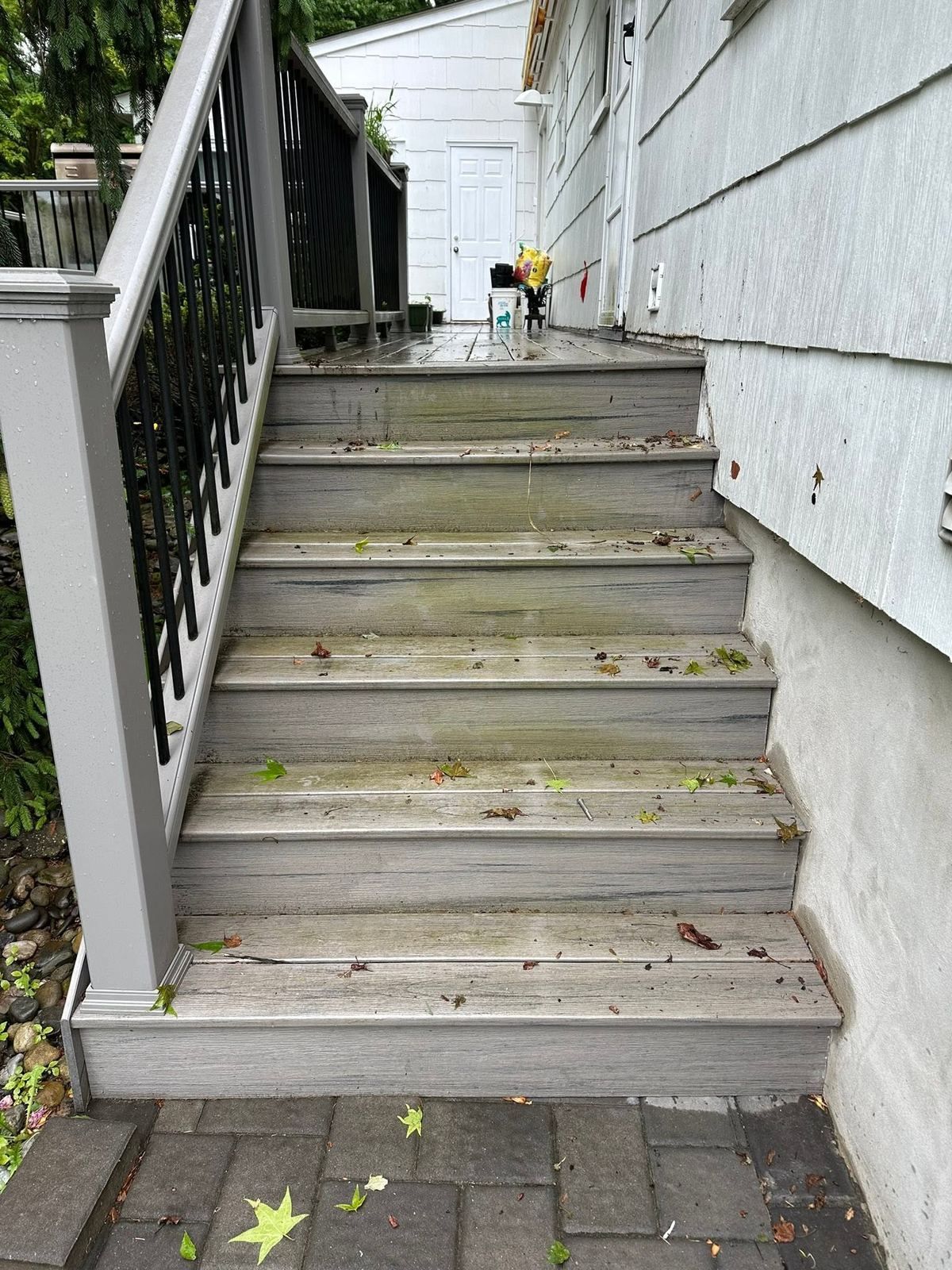
Autumn brings the heaviest seasonal load. Leaf fall from the township's mature oaks, maples, and street trees mats on deck surfaces, and the tannin released as leaves decompose leaves dark stains on wood and composite alike when it is not cleared. Winter follows with freeze-thaw cycles from December into March that drive moisture into the grain, lift failing stain, and open checks and splits in the board ends. Homes near Farrington Lake, Dallenbach Lake, and the Lawrence Brook corridor sit in higher ambient moisture and see growth return faster than homes on open lots. Deck restoration removes the accumulated damage of that full cycle and seals the wood against the next one.

Deck Restoration Challenges Unique to East Brunswick Properties

The age of East Brunswick's housing stock is the first challenge. Decks on the township's 1960s through 1990s colonials and split-levels are often original or first-replacement pressure-treated pine, and many have been through several rounds of homeowner staining that left uneven color, peeling layers, and film-forming finishes that must be sanded or stripped before a new coat will adhere. Railings on older decks frequently show loose balusters and corroded fasteners, and ledger boards attached to the house need inspection before restoration proceeds, because a deck that is structurally compromised should not be refinished until it is repaired.


Shade is the second challenge. East Brunswick's celebrated tree canopy keeps many backyard decks damp for much of the day, which means mold and algae penetrate the wood rather than sitting on the surface, and the boards need an oxygen-based cleaner and adequate drying time rather than a quick rinse and same-day stain. Composite and PVC decks, common on newer construction and on replacements throughout the township, present a different problem: they cannot be sanded, and they streak or lose their texture under high pressure, so they require a gentle wash and UV-protectant treatment rather than the full wood process. Lakeside and brook-corridor homes add persistent humidity that shortens the interval between restorations. Effective deck restoration in East Brunswick requires identifying the material, correcting the structure, and matching cleaning, sanding, and finish to the conditions the deck actually lives in.

Why East Brunswick, NJ Residents Trust Catanzaro's Power Washing?

Homeowners in East Brunswick trust Catanzaro's Power Washing because we treat a deck as a structure to be restored rather than a surface to be sprayed. Several years of exterior restoration work across Middlesex County have given our team direct experience with the shaded, leaf-stained, multiply-stained decks that the township's canopy and humid summers produce. We inspect railings, posts, joists, and ledger boards before work begins, wash at a pressure adjusted to the material, and recommend only the steps a deck needs, whether that is a cleaning and reseal or a full strip, sand, and refinish.


Our team uses oxygen-based cleaners rather than toxic bleach to remove mold and algae, sands wood surfaces smooth to remove raised grain and splinters, and applies semi-transparent or solid stains and sealers with UV inhibitors in multiple thin coats for even coverage and lasting protection, in the matte, satin, or gloss finish the homeowner prefers. Composite decks receive a gentle wash and UV protectant suited to the material. We ask that furniture, planters, and grills be cleared 48 hours before we arrive, and we leave the deck ready for the season ahead. We explain each stage as we go and stand behind the result. That combination of structural care, the right products, and clear communication is why Catanzaro's Power Washing is the trusted choice for deck restoration across East Brunswick.

Hire Us! Best and Top-Rated Deck Restoration in East Brunswick, NJ

Gray, fuzzy boards, peeling stain, soft spots near the stairs, persistent mold on the shaded end, and railings that move when leaned on are all signs that a deck has lost the protection it was built with. Left through another winter, the moisture that has already entered the grain freezes and expands, widening splits, lifting more finish, and moving the deck closer to the point where boards must be replaced rather than restored. Professional deck restoration reverses the wear, secures the structure, and seals the wood so the next season's rain and leaf fall rinse off rather than soak in.


Catanzaro’s Power Washing is ready to restore the deck on your East Brunswick property to the condition it was built in. Whether you own a split-level with an original pressure-treated deck that has been stained three times by three owners, a colonial beneath mature street trees where mold returns every summer, or a newer home with a composite deck that has streaked and faded, we have the equipment, materials, and experience to deliver results that meet your expectations. Our team handles decks of every size and material across the township, working efficiently and protecting landscaping throughout. To get started, call or send a message and ask for a quote. We respond promptly, provide transparent pricing based on your deck's actual condition, and schedule service in the dry weather that staining requires.

Frequently Asked Questions

  • 1. How often should a deck in East Brunswick be restored?

    Decks in high-traffic or heavily shaded locations typically need restaining every two to three years, while sheltered, sunny decks can go up to five. The township's dense tree canopy and humid summers place most East Brunswick decks toward the shorter end.

  • 2. What does the deck restoration process include?

    Restoration begins with a structural inspection, followed by a power wash calibrated to the material, sanding to remove raised grain and failed finish, repair of loose railings and damaged boards, and multiple thin coats of stain or sealer with UV inhibitors.

  • 3. Can composite or PVC decks be restored?

    Yes. Composite and PVC decks are not sanded or stained, but they benefit from a gentle wash to remove mold, algae, and staining, followed by a UV-protectant treatment that restores color and slows the fading the material is prone to.

  • 4. How long does deck restoration take?

    Most projects take one to three days, depending on the deck's size, condition, and whether repairs are needed. Wood must dry fully after washing before stain is applied, so the schedule follows the weather.

  • 5. How should I prepare my deck before restoration?

    Clear furniture, planters, grills, and rugs from the deck at least 48 hours before the scheduled visit so the boards can dry and the crew has full access to every surface, railing, and stair.

  • 6. How long will a restored deck last?

    A properly restored and maintained deck can last an additional ten to twenty years, depending on the material, exposure, and how consistently it is cleaned and resealed. Restoration also improves safety and can add to a home's resale value.

  • 7. Does restoration prevent future mold and mildew?

    Oxygen-based cleaning removes existing growth at the root, and sealers with mildew inhibitors slow its return. Shaded decks beneath East Brunswick's tree canopy will still need periodic cleaning, but a sealed surface holds growth on top where it rinses off.

  • 8. Is restoration a better choice than replacing my deck?

    When the framing is sound, restoration costs a fraction of replacement and returns the deck to a clean, uniform, protected condition. Replacement is warranted only when joists, posts, or ledger boards are rotted or the structure is otherwise compromised.