Paver Restoration in Marlboro, NJ
Driveways, Patios, and Walks | Joints Cleared and Refilled | Sealing Quoted Separately | Free Estimates
Whatever is in the joints of a paver surface now has to come out before anything new goes back in. That part rarely varies. What goes back in is the part with a decision in it.
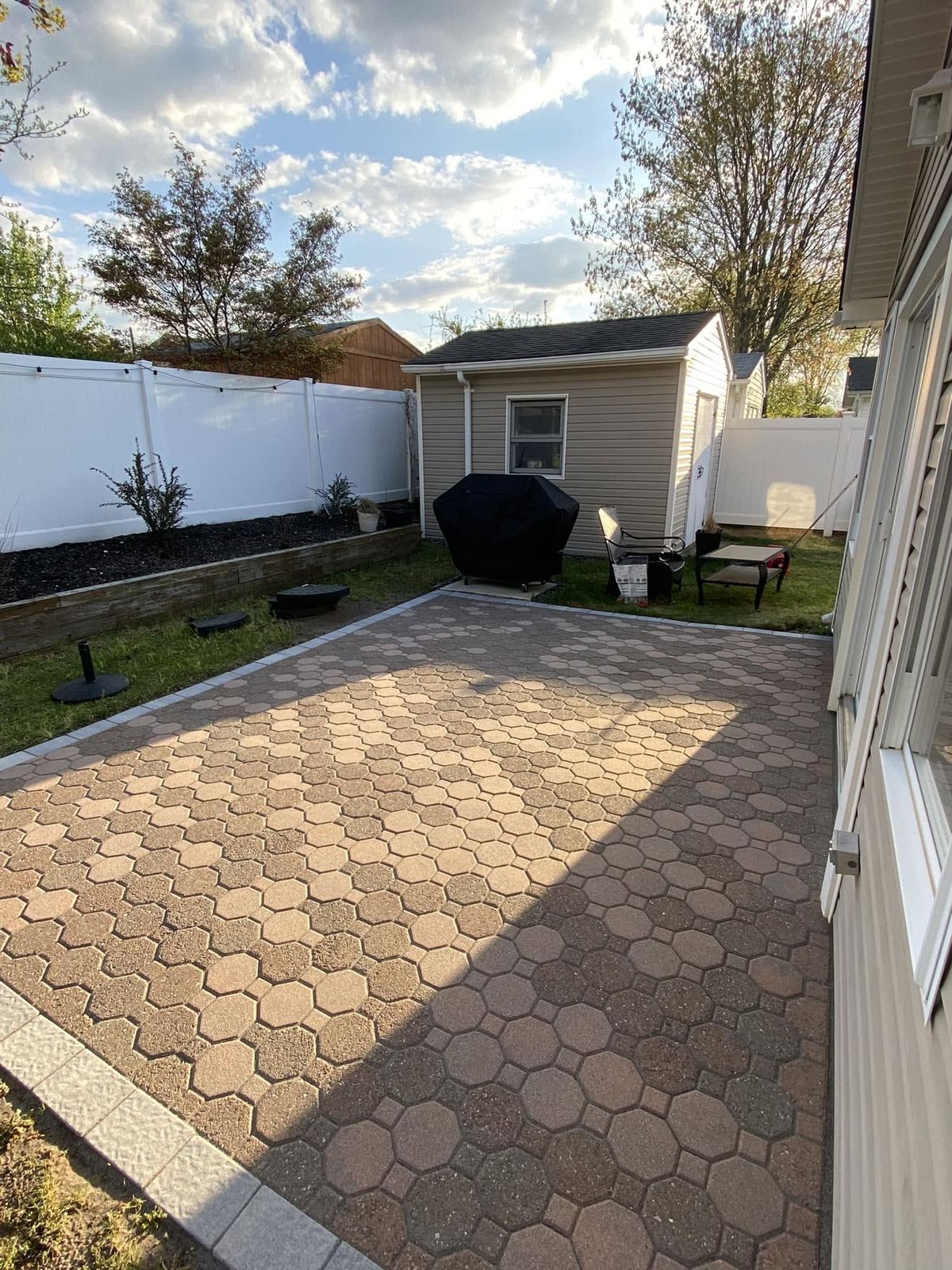
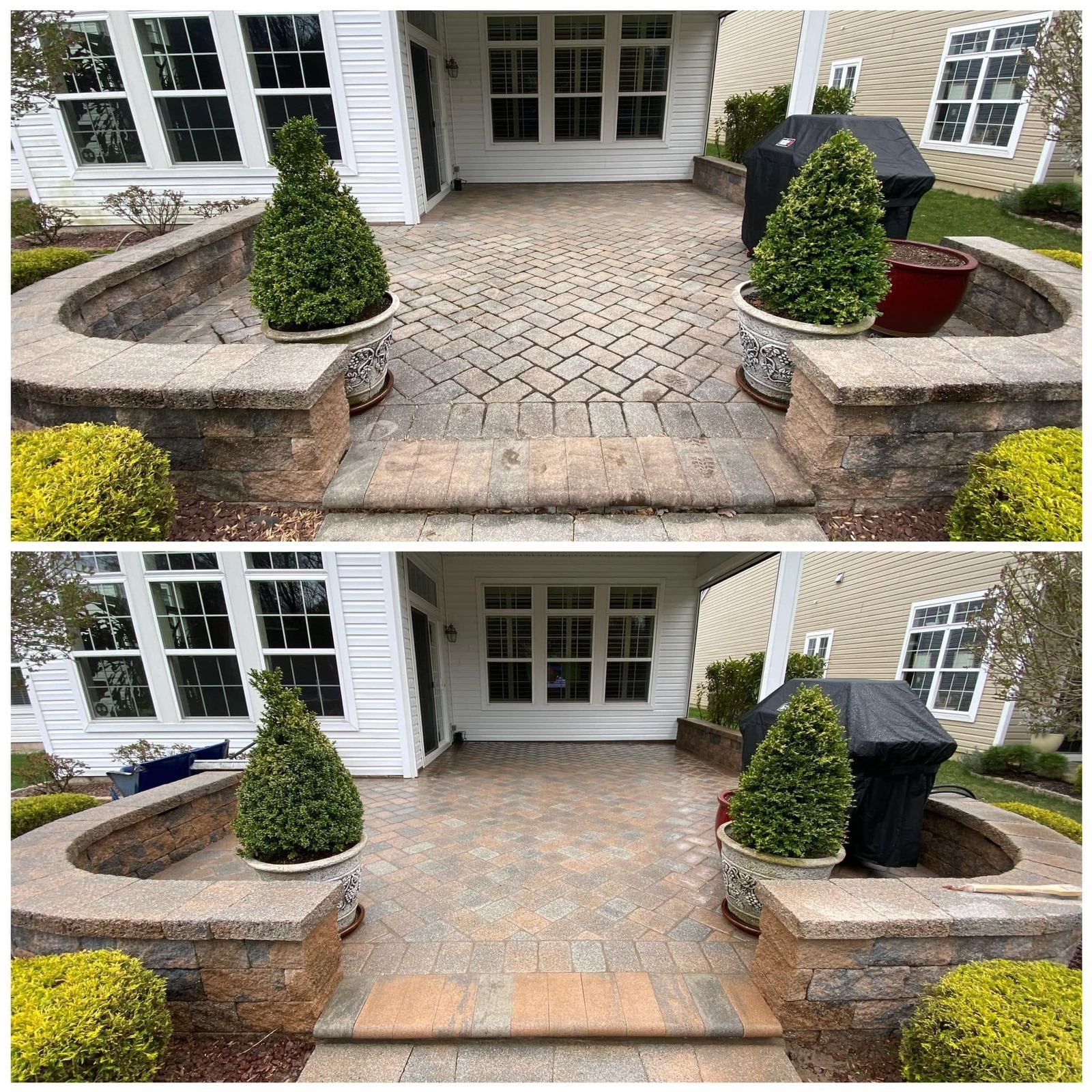
A photo of the surface, and one taken straight down into a joint.
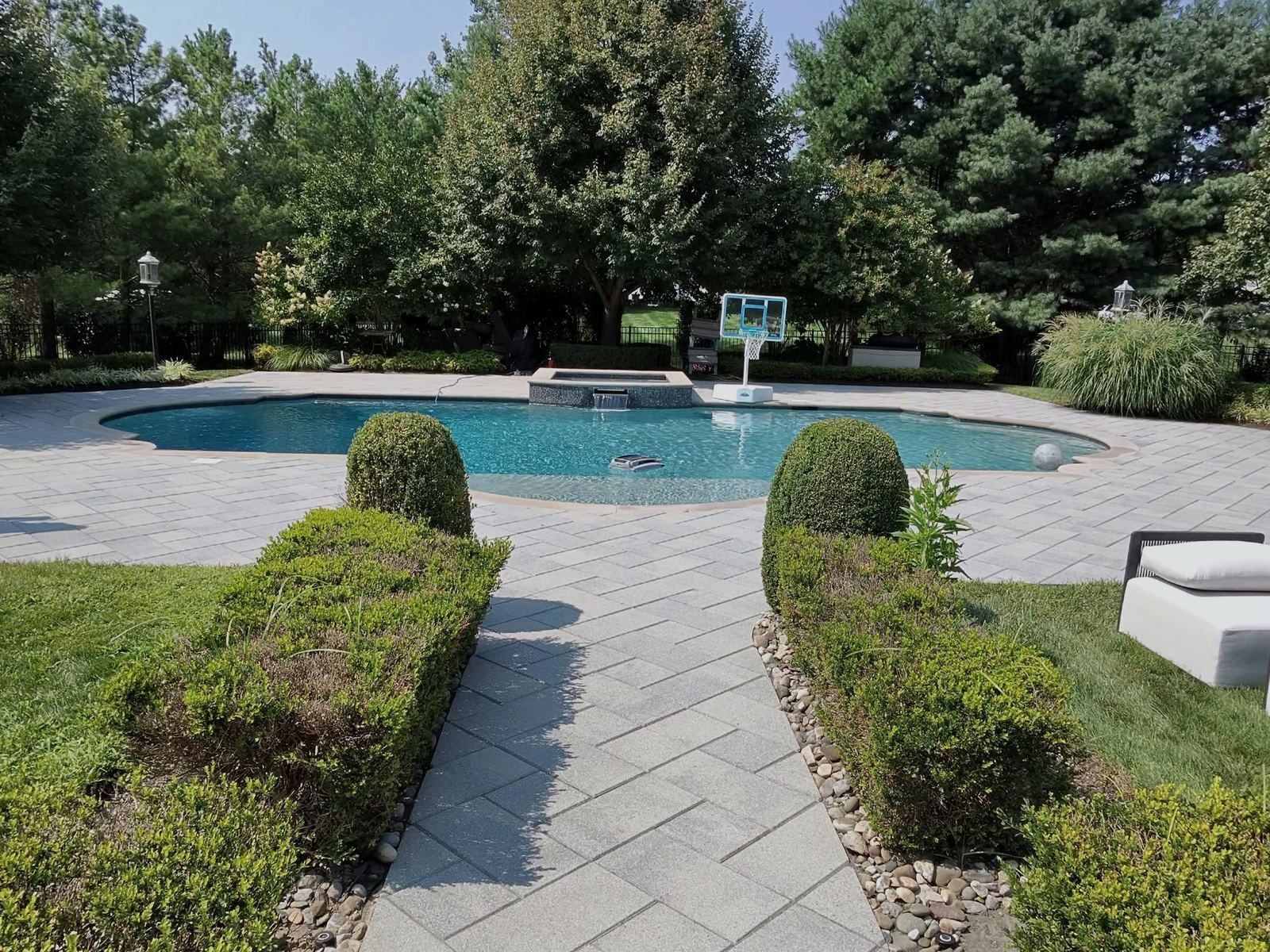
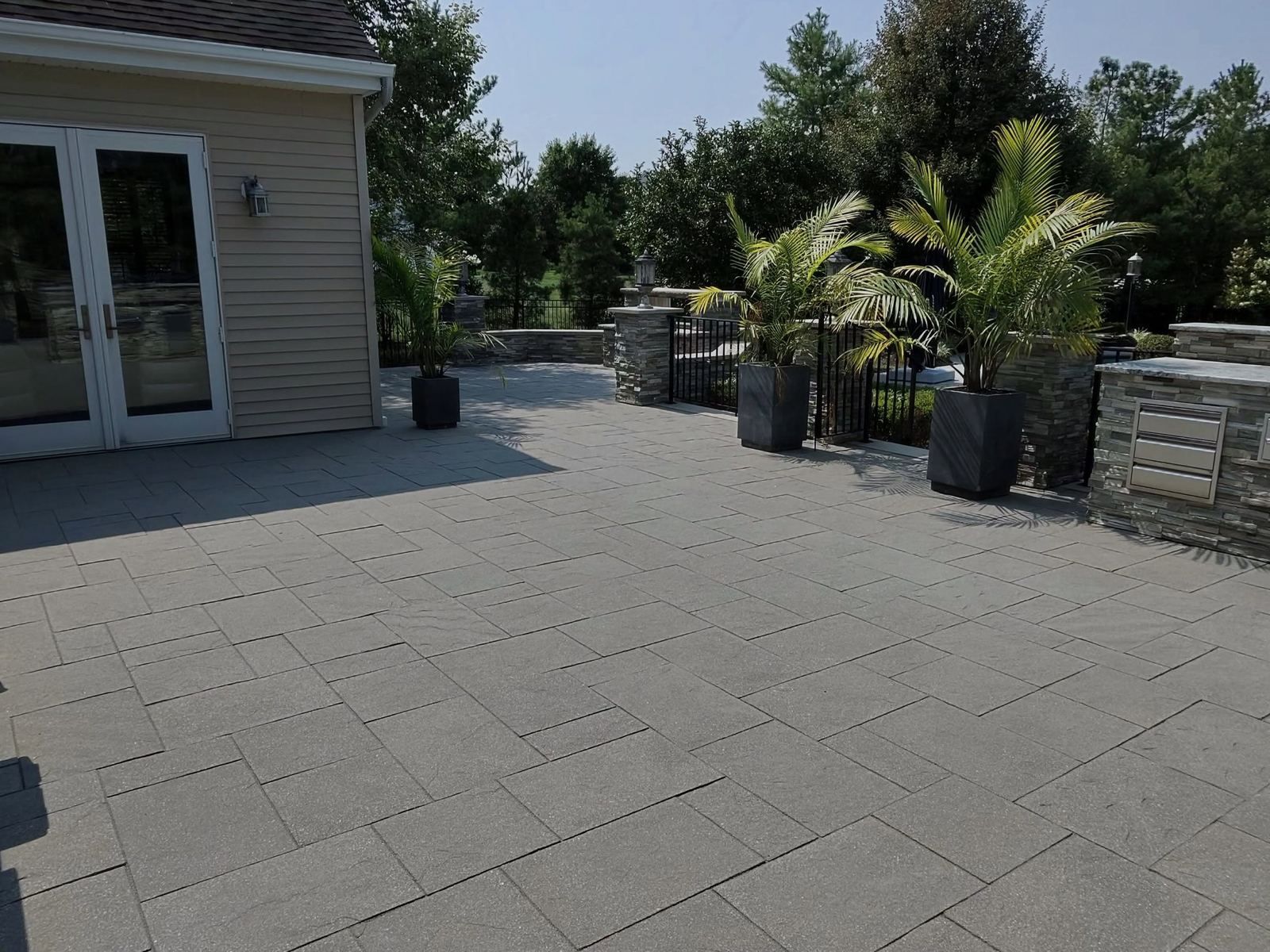
Polymeric sand is the usual answer and it is the right one on most surfaces. It is not automatic, though, because it has limits a loose sand does not have, and the joints have to suit it.
We are in Freehold, one town over. Call or text (732) 718-6268.
What Goes Back In
Polymeric Sand Is the Usual Answer, and It Still Has Conditions
Polymeric sand and how it sets are covered on the paver restoration page. What it will not do is suit every joint. Four things decide whether it suits yours, and one argues the other way.
The joints have to be wide enough, and not too wide
Manufacturers publish a minimum joint width of an eighth of an inch. Tighter than that and the sand will not go in. The maximum is where products differ enormously, from around an inch for a standard sand up to several inches for the wide-joint formulas made for flagstone, so the joints get measured before a product is picked.
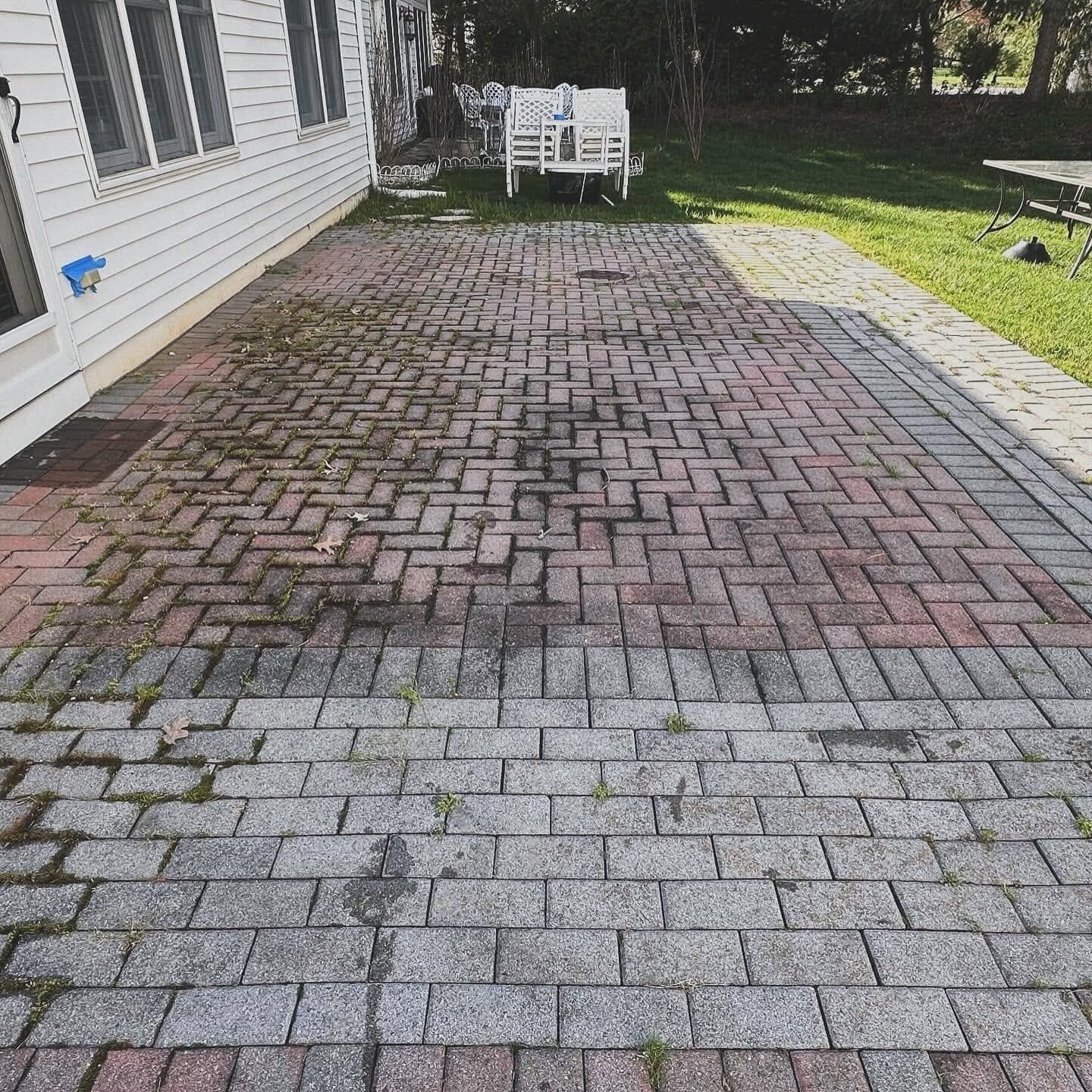
And deep enough to lock into
An inch and a half of depth is what the published figures ask for, because a joint shallower than that has nothing to hold on to. Depth and width together also decide how much sand a surface takes, which is a different question from whether it can take any.
Some units hold moisture and can mark
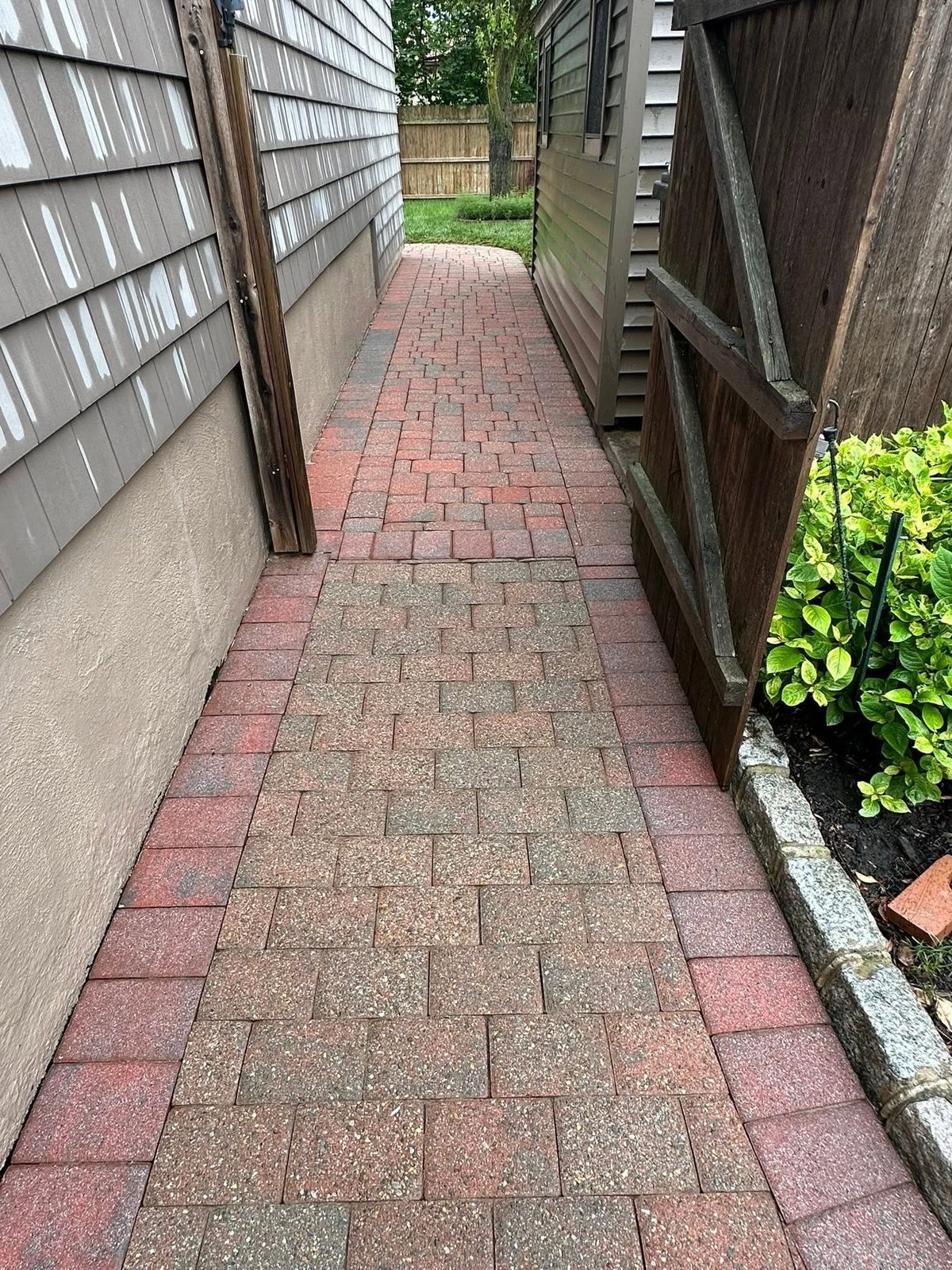
Clay brick and the more porous units hold water in the face, which can start the binder curing before the sand is where it should be and leave residue behind. On those surfaces the answer is a test area first, in a spot nobody looks at, and the rest of the patio waits on how that reads.
It wants a dry stretch of weather
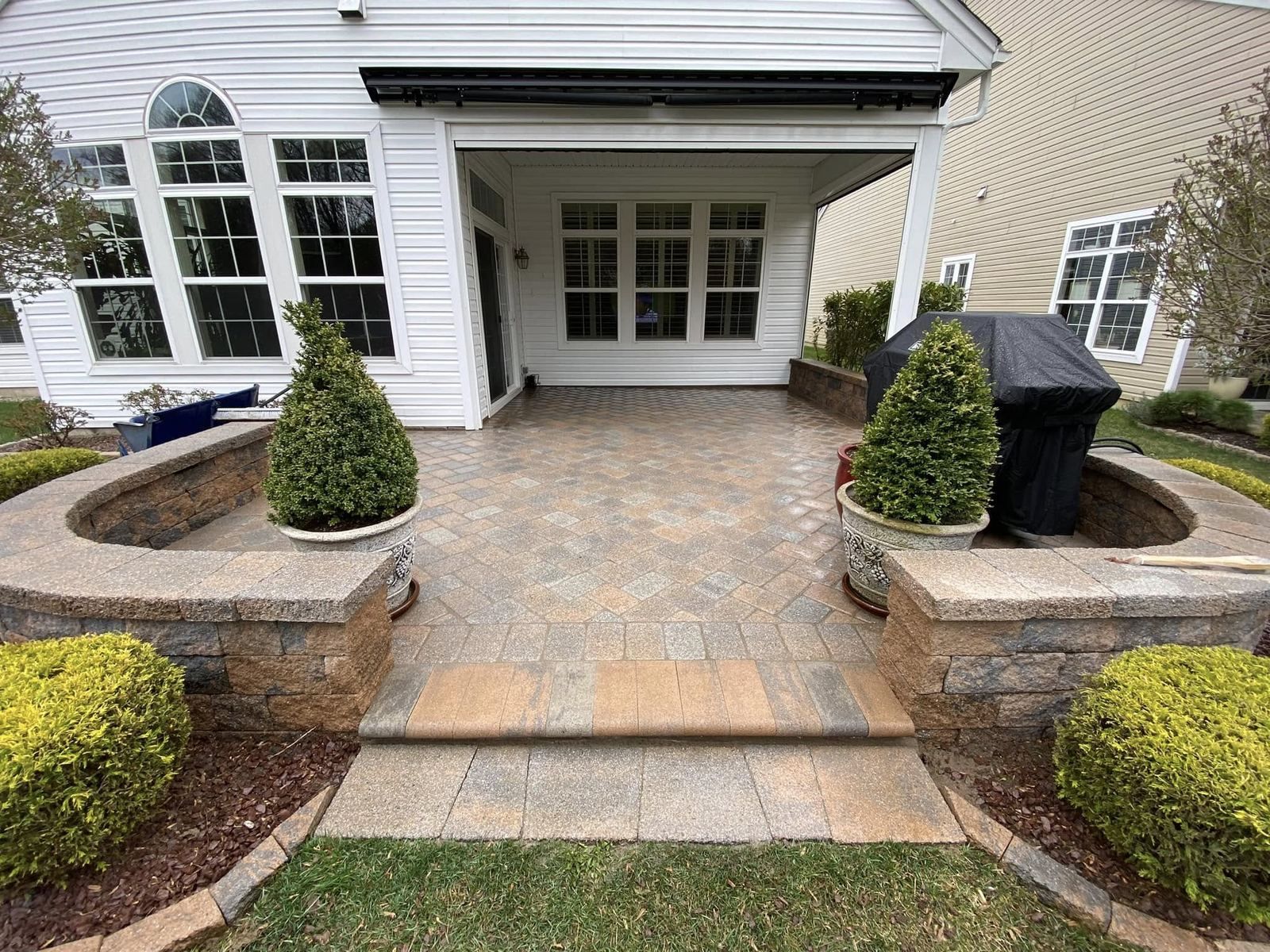
Polymeric goes into dry joints and needs to cure before it is rained on. A surface still damp underneath, or rain arriving too soon after, is how a joint sets badly. Paver work runs March to Thanksgiving, and inside that season the weather still gets a say on the day of the job.
The thing that argues the other way
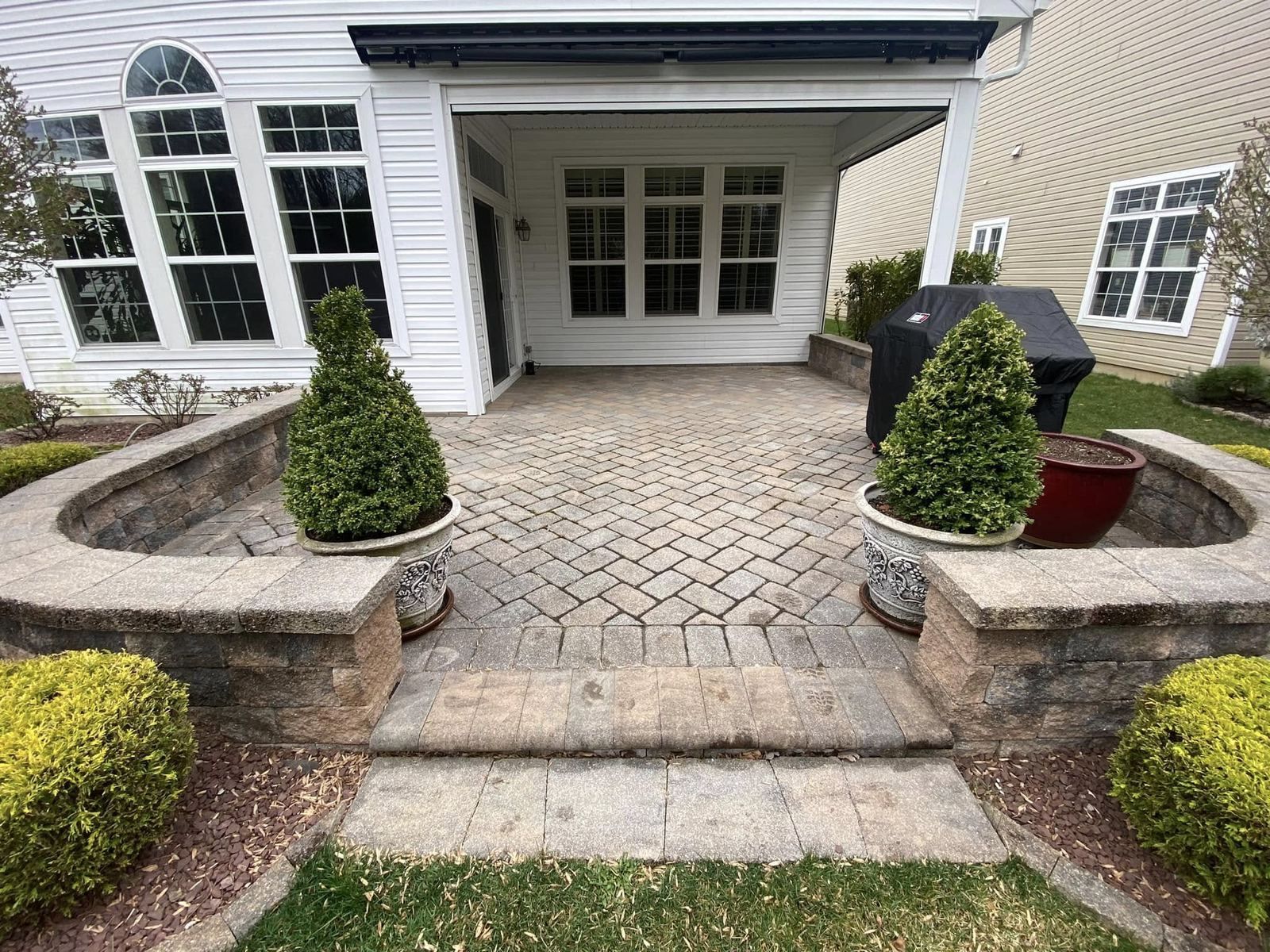
A cured joint has to be cut or chipped out to free a paver, where a loose joint scrapes open with a hand tool, so a future lift and reset is slower. On a surface where somebody expects to be lifting units that is worth weighing. On most surfaces it is not.
Why We Open a Joint Before We Answer
Marlboro's Custom-Home Streets Went In While the Material Was Changing
Polymeric jointing sand came into common use around the turn of the 2000s, which is to say it arrived over a few years and not on a date. Two of Marlboro's custom-home streets went in across that stretch: Georgetown Estates in Morganville from the early 2000s, Lexington Estates near Routes 79 and 18 from the middle of the decade. Two driveways of almost the same age on those streets could have been jointed two different ways.
It matters because new polymeric bonds to old polymeric no better than it bonds to loose sand, so the joint comes out either way. What changes is how hard it is to get out, and how much of the job that takes.
What an Open Joint Tells Us
What Is Actually in There, and What Each One Changes
1 Loose sand, low in the joint
The straightforward case. The joint gets cleared to depth, the surface cleaned, and new sand goes in.
2 A cured joint that has started to break up
Old polymeric. It comes out the same way, and it takes longer, because it has to be broken before it can be cleared.
3 Dirt, leaf litter, and roots where sand should be
The joint has to be dug out instead of cleared, and that is most of the work. It is also the one that has usually been growing weeds.
4 A joint narrower or wider than the published range
A measuring question before a material question. Narrow joints and very wide joints are answered differently, and sometimes a loose sand is the honest answer.
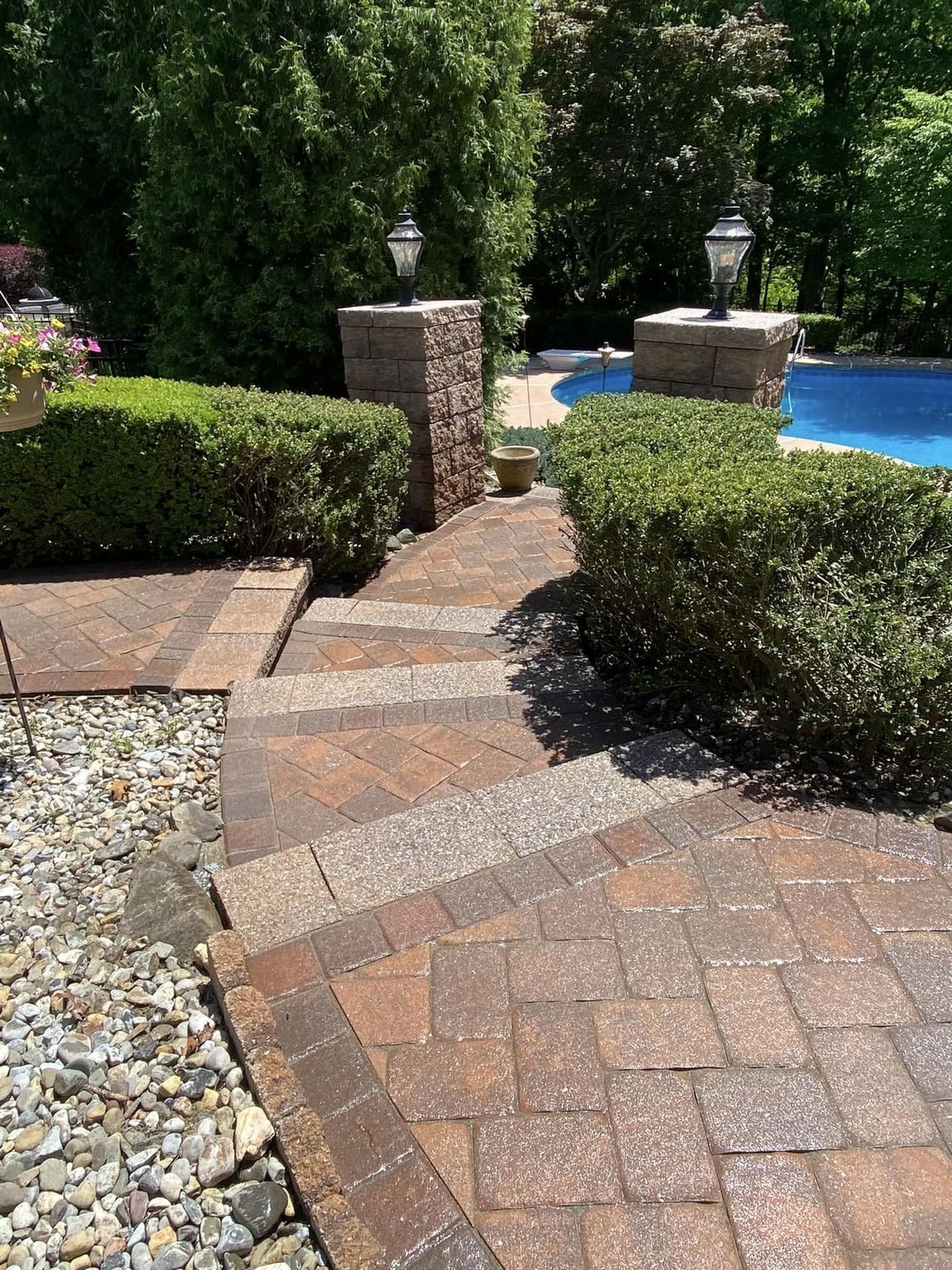
None of that reads from standing height, which is why we ask for a shot taken down into a joint. Whatever the joints turn out to hold, the clean and the re-sand are one job and sealing is quoted on its own line beside it.
One thing an open joint does not answer is what is underneath the pavers. A unit that has dropped or tipped is telling you about the base it is bedded on, and no joint material corrects that.
Worth knowing before you book
Reviews
Two Customers
From a Google review (Robert Santucci, 2024): On choosing a local company.
“Angelo was a pleasure to work with. If you are debating what local power washing company to go with, look no further!”
Robert Santucci, Google review
Read this review on Google →From a Google review (Alexa Resnick, 2023): On the service.
“I am so happy that I chose Catanzaros Power Washing. They are very professional and provide such amazing service! I definitely recommend them and will be using them again!”
Alexa Resnick, Google review
Read this review on Google →Get a Free Estimate
Send a Photo Down Into One Joint
Stand over the surface, pick a joint away from the edge, and take the picture straight down with something small beside it for scale. That one shot usually rules out some of what could be down there and tells us what to bring. The measuring happens at the estimate.
Serving Marlboro, Morganville, and Robertsville. Paver work runs March to Thanksgiving.