What Causes Black Stains, Green Algae, and Rust on Driveways and Pavers?
We got it.
Thank you for contacting us.
We’ll get back to you as soon as possible.
Gutters as Harborage for Insects and Rodents
Not every situation requires a full walkthrough before you have a general sense of direction. Here’s a practical starting point.
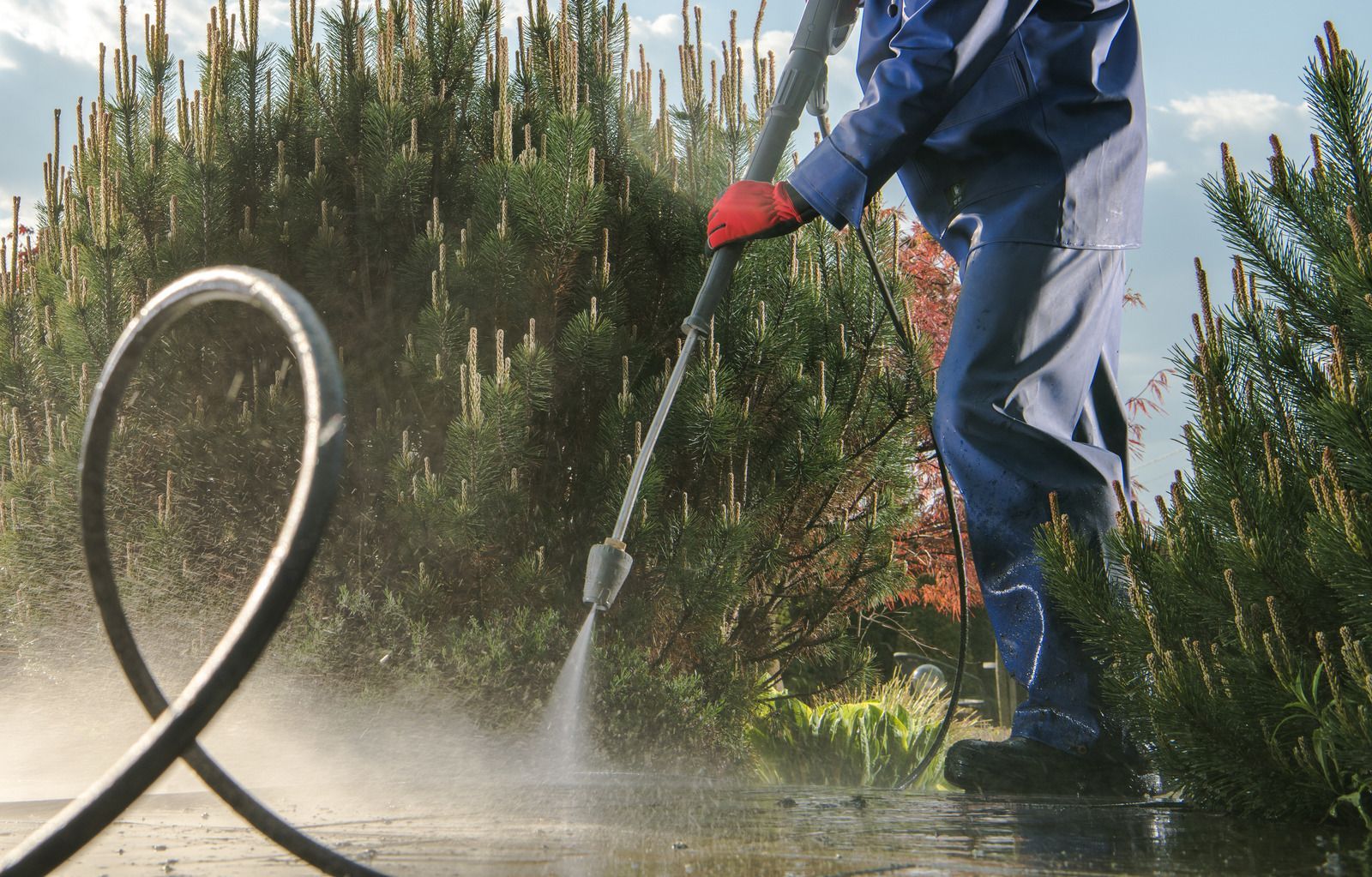
Power washing is typically right for: concrete driveways and parking areas, asphalt surfaces, brick and paver walkways and patios, masonry walls, and commercial surfaces with heavy compacted grime or oil buildup.
Soft washing is typically right for: asphalt shingle, tile, and metal roofs, vinyl and wood siding, stucco, painted exterior surfaces, wood fences and decks, and any surface where the primary issue is biological growth — mold, mildew, algae, or bacteria.
A professional assessment is the right first step for: older surfaces with pre-existing wear, surfaces that have been power washed repeatedly without lasting results, and properties with multiple surface types each requiring a different approach. If you’re also unsure
how often your property should be cleaned between services, that answer depends on the same variables — surface type, local conditions, and the method used last time.
Damage to Plantings and Garden Beds
Ice Dam Formation in Winter
Introduction
You walk outside one morning and notice it — dark streaks across the concrete that weren't there last spring, a green film working in from the edges of the pavers, or an orange blush radiating from where the downspout meets the driveway. One season, they're barely noticeable. Next, they've spread across the surface, and no amount of garden-hose rinsing makes any difference.
Each type of staining has a specific cause, and understanding what you're looking at changes how you address it. Black streaks are not the same problem as green growth, and neither is the same as rust staining — they're produced by different processes, penetrate surfaces differently, and respond to different treatments. Applying the wrong approach either fails to solve the problem or makes it worse.
New Jersey's climate — humid summers, heavy rainfall, significant tree coverage, and hard winters across Central and South Jersey — accelerates all three simultaneously. This guide covers what each one is, why it appears, and what it takes to actually remove it.
The Black Stains — What They Are and Why They Spread
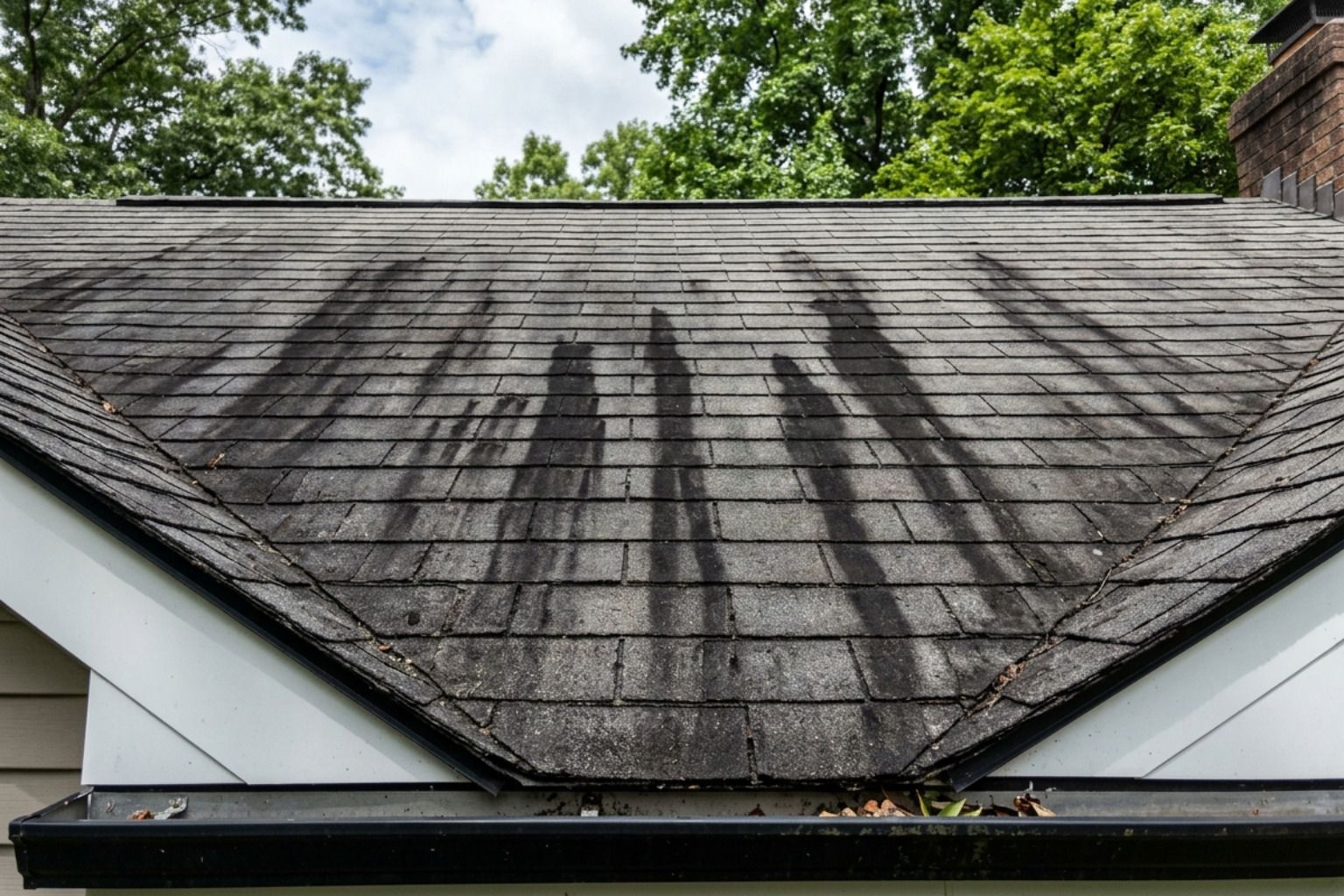
The dark streaking that appears on concrete driveways and pavers — the kind that looks almost like an oil stain but doesn't behave like one — is most commonly caused by Gloeocapsa magma, a cyanobacterium that also causes dark streaking on roof shingles. It's airborne and feeds on calcium carbonate in concrete and limestone-based materials, which means it doesn't need an obvious contamination source to arrive. It appears first as small dark spots frequently dismissed as water marks, then spreads as the colony grows. In New Jersey's humid summers, a small colony can spread across an entire driveway surface within a single season.
The second source of black staining — particularly on pavers — is mold and mildew. Unlike Gloeocapsa magma, which establishes even between rain events, mold requires persistently moist conditions: shaded patios, paver surfaces near downspouts, walkways under heavy tree canopy, and joint areas that retain moisture after rain. Mold-based discoloration tends to appear in irregular patches rather than streaks, concentrating in grout lines and surface texture where moisture lingers longest.
Both forms of black staining are worsened by conditions common across Central and South Jersey. Humid summers, consistent spring and fall rainfall, and heavy deciduous tree coverage in townships like Millstone, Marlboro, and Colts Neck create ideal conditions for cyanobacteria and mold to establish and persist. Shaded surfaces that never fully dry between rain events are particularly vulnerable, and unsealed porous surfaces absorb biological organisms into the material, where treatment becomes significantly more difficult.
The Green Growth — Algae, Moss, and Lichen
Green growth on driveways and pavers is typically one of three organisms — algae, moss, or lichen — each with distinct characteristics and causes. Green algae is the most common and fastest-establishing. It's a single-celled plant organism that thrives in moisture and indirect light, appearing first on the shaded side of a driveway, along paver edges where water pools, or on walkways with a northern exposure. In New Jersey, spring and late summer are peak periods — warm temperatures combined with regular rainfall allow algae to spread from early green tinting to a slick, visible film across a broad surface area within weeks.
Moss is thicker and more structurally embedded than algae. It grows in persistently damp, low-light conditions and anchors into the porous surface of concrete and paver joints — which is why it's harder to remove than surface algae. A patio or driveway with established moss is one where moisture is consistently present: heavy shade, poor drainage, irrigation runoff, or leaf debris holding water against the surface. Moss is common in wooded areas of Central Jersey, where tree coverage limits direct sun on paved surfaces through most of the day.
Lichen is the most stubborn of the three — a compound organism of algae and fungi that attaches directly to stone, concrete, and brick. It presents as flat, crusty patches in grey-green, yellow-green, or orange tones and is most common on older paver installations where surface irregularities give it grip. Lichen cannot be rinsed away — it requires professional chemical treatment to break the bond, and the surface scarring it leaves often makes
paver restoration necessary to recover the original appearance.
The Orange and Rust Stains — Where They Come From
Orange or rust-coloured staining on driveways and pavers comes from one of three sources. The most familiar is direct iron oxidation — rust transferred from a metal object in contact with the wet surface. Metal furniture legs, garden tools on the driveway, a hose fitting on a paver, or rust from a corroded downspout bracket all leave an orange-brown blush that intensifies over time. Unlike biological staining, rust stain is a mineral deposit — it won't spread on its own, but it doesn't respond to the biological treatments used for algae and mold.
The second source is iron-rich irrigation or well water. In parts of Central and South Jersey where properties use well water for lawn irrigation, iron oxidizes on contact with air and deposits iron oxide on every surface the water hits consistently — driveway edges, paver borders, concrete walkways near sprinkler heads. Even modest iron concentration accumulates into significant staining over multiple seasons. Power washing combined with purpose-formulated rust-treating solutions addresses this effectively, though the source needs to be managed to prevent recurrence.
The third source is tannin staining from organic debris — oak leaves, acorns, pine needles — that breaks down on a damp surface and releases tannin compounds into the paver or concrete. Tannin staining produces a diffuse brownish-orange blush rather than a sharp rust color, most common on wooded properties across Middlesex and Monmouth County, where pavers aren't cleared promptly after rain. It penetrates porous surfaces over time and requires a specific cleaning agent — not a general pressure wash — to lift fully.
Why New Jersey Properties Are Particularly Susceptible
All three categories of staining exist everywhere, but Central and South Jersey combine the conditions that accelerate each of them on the same properties in the same climate. Humid summers deliver the extended warmth and moisture that algae, cyanobacteria, and mold need to establish and spread. Properties across Monmouth County's coastal zone experience additional atmospheric humidity from proximity to the Raritan Bay and the Atlantic, keeping exterior surfaces moist longer after rainfall and extending the biological growing season well into autumn.
The region's tree coverage compounds every staining type simultaneously. Heavy canopy from oak, maple, and pine across Millstone, Colts Neck, and Marlboro keeps paved surfaces shaded and persistently moist — exactly what moss and algae require. Leaf and organic debris on pavers releases tannins, traps moisture, and introduces spores that accelerate Gloeocapsa magma and mold establishment. Wooded properties in Central Jersey typically deal with multiple staining types simultaneously on different areas of the same driveway or patio.
New Jersey's freeze-thaw winters add a structural dimension that gets overlooked until damage is established. Moisture that penetrates concrete or paver material freezes, expands micro-fractures, and allows biological organisms and mineral deposits to penetrate more deeply the following season. An unsealed surface is significantly more vulnerable to this cycle than a properly sealed one. Cleaning before the first hard freeze — late summer to early fall — and sealing immediately after gives paved surfaces their best protection through winter and into the following growing season.
What It Takes to Remove Each Type of Staining Properly
Black biological staining from Gloeocapsa magma and mold requires more than pressure alone. High-pressure washing removes what's visible on the surface but leaves the organism's root system embedded in the porous material — which is why black-stained driveways that have been pressure washed before tend to restain faster. Effective removal requires a biodegradable algaecide or biocidal solution applied at the correct concentration and dwell time, followed by a thorough rinse. Soft washing techniques — low-pressure application of these solutions — are often preferred for biological contamination on pavers and textured concrete, where high pressure risks surface damage.
Green algae and moss on hard surfaces like concrete driveways and brick paver walkways respond well to power washing when the right pre-treatment chemistry is applied first. Lichen requires more aggressive chemical treatment and adequate professional dwell time before mechanical removal is effective. It's one of the most common reasons homeowners request paver restoration after a standard clean hasn't delivered the expected result — because lichen's attachment leaves physical marks on the surface that cleaning alone can't address.
Rust and tannin staining require purpose-specific treatment agents targeting the specific compound — iron oxide for rust, organic tannin molecules for tree debris staining. Neither responds to general-purpose exterior cleaning solutions, and applying the wrong product to either stain causes additional discoloration rather than improvement. Professional diagnosis before treatment — knowing exactly what you're dealing with — determines whether the result is a properly cleaned surface or one that now needs restoration rather than cleaning.
Getting It Right the First Time
Most driveway and paver staining follows predictable logic — it appears where conditions favor it, penetrates deeper the longer it's left, and responds to treatments that address the actual cause rather than the appearance. Black streaks, green growth, and rust staining are three distinct problems that look equally stubborn from the driveway but require fundamentally different approaches to resolve.
Identifying the stain correctly before applying any product is the whole job. Professional assessment determines whether the surface needs biological treatment, rust-specific chemistry, or a combined approach — and applies it in the right sequence at the right concentration. That distinction separates a result that lasts multiple seasons from one that reverts within weeks.
Catanzaro's Power Washing serves homeowners across Monroe Township, Freehold, Old Bridge, Marlboro, East Brunswick, and throughout Central and South Jersey. If you've noticed black streaks, green growth, or rust staining on your driveway or pavers, call 1-732-718-6268 or visit our
contact page to schedule an assessment.
Search
Latest Post
Thank you for contacting us.
We’ll get back to you as soon as possible.