Power Washing vs Soft Washing: Which Does Your Home Actually Need?
We got it.
Thank you for contacting us.
We’ll get back to you as soon as possible.
Gutters as Harborage for Insects and Rodents
Damage to Plantings and Garden Beds
Ice Dam Formation in Winter
Introduction
You search “exterior cleaning near me,” and within seconds, you’re staring at two different terms — power washing, soft washing — used by the same companies, sometimes on the same page, rarely explained in a way that helps you decide. All you want is a clean driveway, a roof that doesn’t look like it’s growing a garden, or siding that doesn’t make the whole house look neglected.
The answer most sites won’t give you directly: the right method depends on two things — the surface you’re cleaning and what’s growing or building up on it. Choose the wrong one and you either damage what you’re trying to protect, or you get results that disappear within a season.
At Catanzaro’s Power Washing, we’ve worked on properties throughout Monroe Township, East Brunswick, South Brunswick, Old Bridge, and across Central and South Jersey long enough to know that most homeowners aren’t asking the wrong question — they just haven’t been given a clear answer. By the end of this guide, you’ll know which method fits your situation.
The Core Difference, in Plain Terms
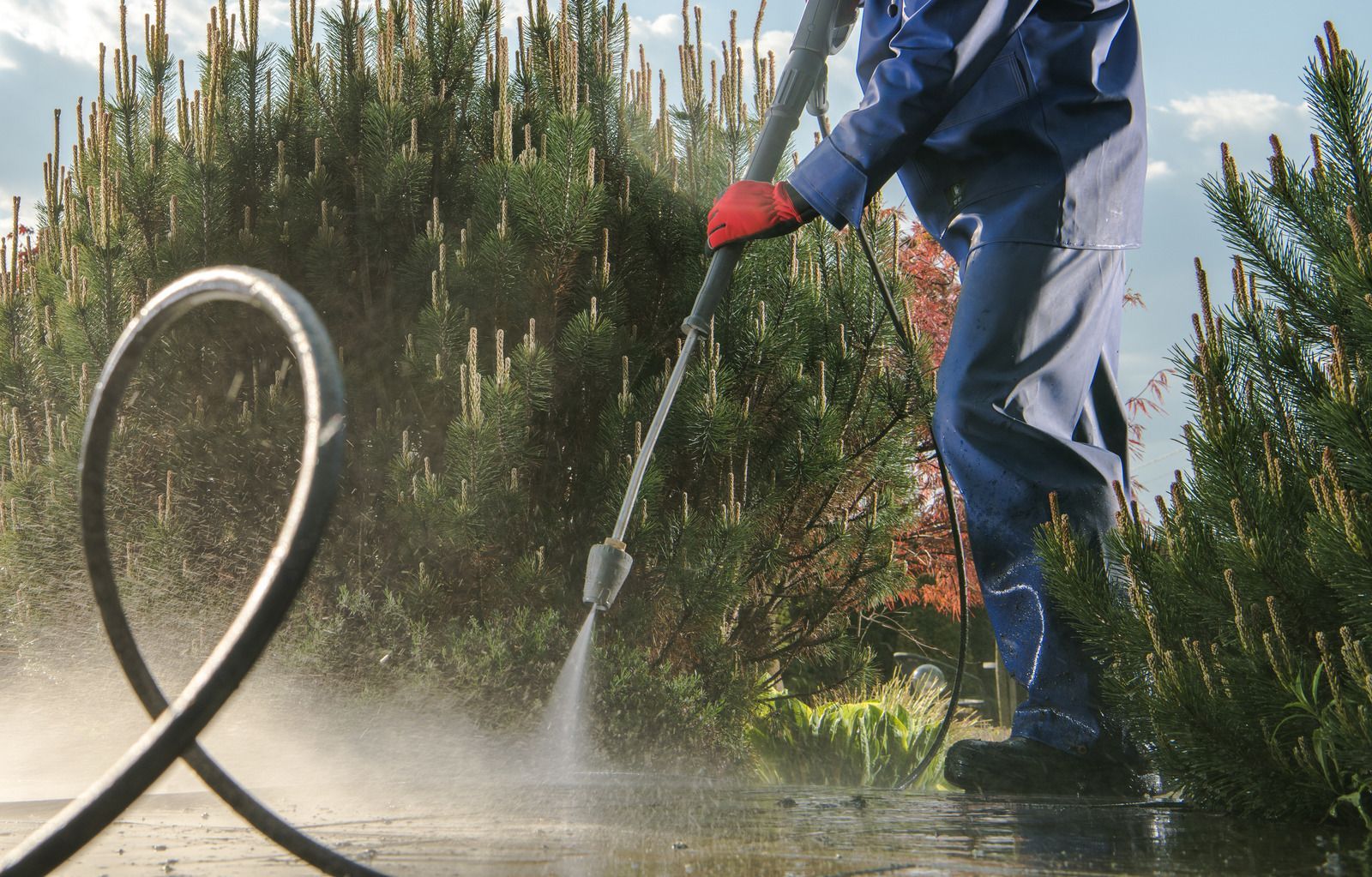
Power washing works through force. A high-pressure stream of water blasts away built-up grime, oil stains, and compacted debris through mechanical action. That’s what makes it effective — and also what makes it the wrong choice for certain materials. The pressure does the cleaning, which means the surface has to be strong enough to handle it without being etched, cracked, or stripped.
Soft washing approaches the problem differently. It uses a low-pressure application of biodegradable cleaning solutions formulated to break down and kill organic growth — mold, mildew, algae, bacteria — at the source. The rinse is gentle enough that delicate surfaces stay completely intact, but the contamination isn’t just moved around. It’s neutralized.
Getting this choice wrong in either direction carries real consequences. Using high pressure on vinyl siding, roof shingles, or painted wood can cause damage that costs far more to fix than the cleaning would have. Using soft washing on concrete caked with oil stains and road salt leaves you disappointed because chemistry alone won’t shift years of embedded grime. Matching the method to the surface is the difference between money well spent and money wasted.
When Power Washing Is the Right Choice
Concrete driveways, brick walkways, paved patios, and asphalt surfaces are built to withstand pressure from vehicles and professional-grade equipment alike. When these surfaces have accumulated oil stains, tire marks, or compacted grime, mechanical force is what removes them. New Jersey winters compound this: road salt residue, freeze-thaw cycles, and months of limited outdoor maintenance mean that by spring, most driveways in Central NJ are carrying a full season’s worth of buildup — exactly where power washing delivers results no gentle rinse can match.
Power washing also plays a critical role in preparation before restoration and painting projects. Before applying a fresh coat of paint or treating a weathered deck, the surface needs stripping of old coatings and contaminants — because painting over a dirty or flaking surface produces results that peel within a season. As part of our exterior painting and deck restoration process, controlled pressure washing is often the right first step.
Commercial surfaces are a third strong case. Parking lots, loading docks, commercial walkways, and storefront entries take daily punishment that residential properties don’t. Grease, vehicle exhaust residue, and constant foot traffic create embedded grime that demands force to remove. For property managers and business owners across Central Jersey who need a clean, safe, and presentable exterior, power washing handles that scale effectively.
When Soft Washing Is the Right Choice
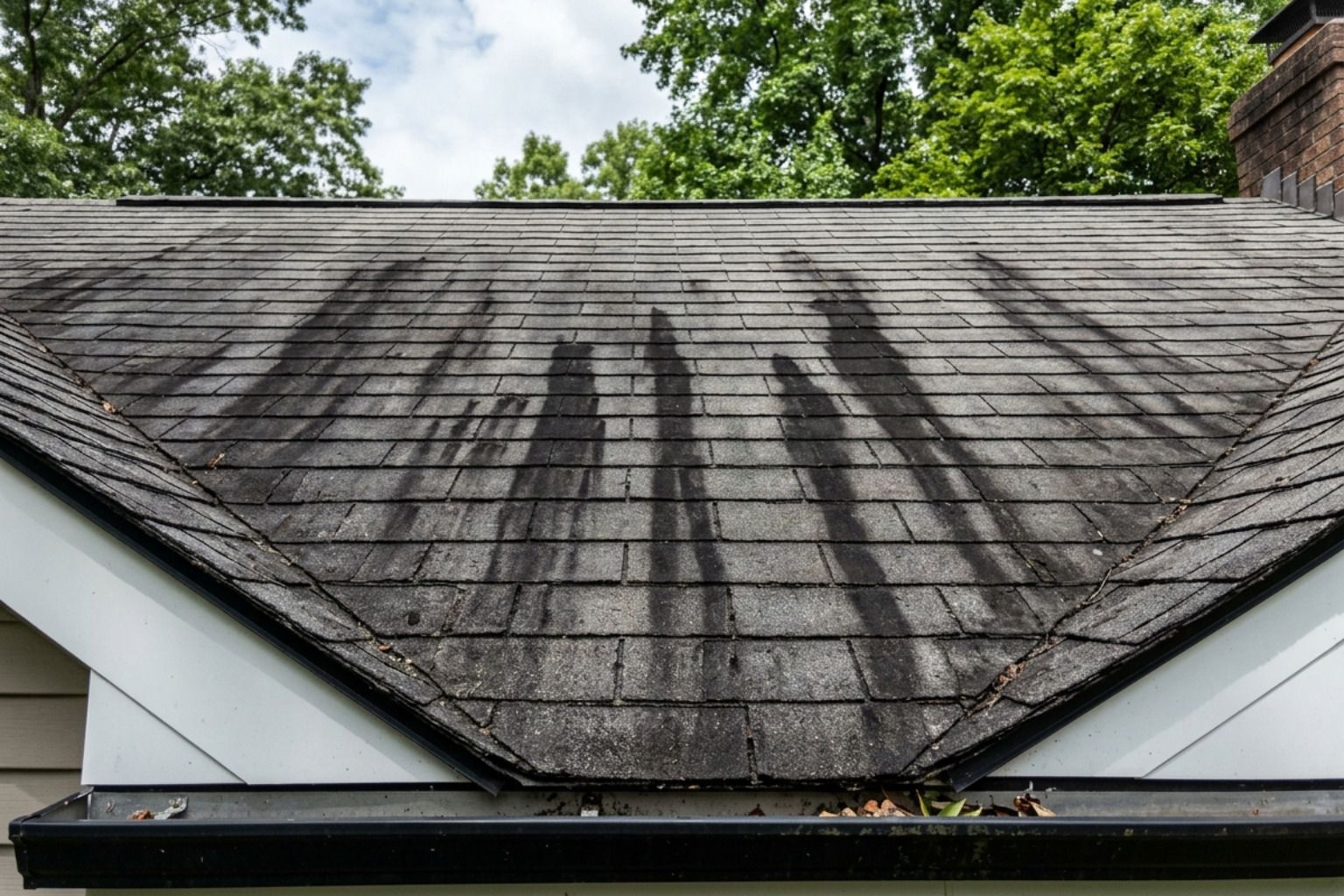
Look at almost any roof in a neighborhood that’s been around for more than a decade, and you’ll likely see it — dark, streaky discoloration running down the shingles in uneven patterns. Most homeowners assume it’s dirt. It’s actually Gloeocapsa magma, a cyanobacterium that feeds on the limestone filler in asphalt shingles. The biggest misconception about power washing: blasting a roof with high pressure doesn’t kill Gloeocapsa magma — it displaces it temporarily, damages protective shingle granules, and accelerates regrowth. A properly applied soft washing treatment neutralizes the organism at the root, and results typically last four to six times longer than any pressure-based approach.
Siding, stucco, painted surfaces, and wood fences sit in a similar category — not because they’re fragile, but because their contamination is biological, not compacted. Mold and algae don’t grip vinyl siding the way oil grips concrete. They grow on it. High pressure removes what’s visible but leaves behind spores that regrow quickly. Soft washing eliminates the growth rather than temporarily stripping it. It’s not a weaker clean — it’s a more targeted one. Our post on what surfaces should be soft washed covers the full breakdown by material.
The clearest sign that soft washing is what a property needs is when the same problem keeps returning. If you’ve had a roof or siding pressure-washed and the staining was back within a year, the method is likely the issue. Biodegradable solutions used in soft washing continue working after the rinse, inhibiting regrowth for significantly longer — making it the more cost-effective choice for biological contamination over time.
What About Homes That Need Both?
This is the part most guides skip — and it’s the question that matters most for homeowners in Central New Jersey. A typical property isn’t a single surface. It has a concrete driveway, vinyl or wood siding, an asphalt shingle roof, and possibly a wood deck or fence. Each has a different material composition, a different type of buildup, and therefore a different cleaning requirement. The real decision isn’t power washing or soft washing — it’s which method goes where.
Consider a homeowner in Monroe Township scheduling a full exterior clean before listing their property. The concrete driveway has oil stains and road salt residue — power washed. The vinyl siding has algae streaks — soft washed. The roof has years of dark bacterial streaking — soft washing treats it without shortening shingle life. The wood deck, due for deck restoration and resealing, gets a low-pressure clean before treatment. One visit, two methods applied where they each belong, every surface handled correctly.
Choosing the wrong method for even one area carries a real cost. High pressure on siding or roofing can mean forced water intrusion or voided manufacturer warranties. Soft washing, where mechanical force is needed, leaves embedded stains that chemistry alone won’t shift. Getting the assessment right before work begins is what separates a result that holds up for years from one that needs redoing the following season.
How a Professional Makes the Call
When an experienced exterior cleaning contractor arrives at a property, the first thing they’re doing isn’t setting up equipment — it’s reading the surfaces. Material type, age, existing damage, contamination type, and proximity to landscaping all factor into the method recommendation before a nozzle is pointed at anything. A professional isn’t attached to one method. The goal is the right outcome for that specific surface on that specific property — not a default approach applied uniformly regardless of what’s there.
New Jersey’s environment adds complexity that a contractor unfamiliar with the region won’t account for. Middlesex County’s mature trees create heavy pollen loads in spring and tannin staining in fall. Shadier properties in Central Jersey retain moisture longer, accelerating biological growth on every surface. The coastal humidity affecting South Jersey drives different algae patterns than you’d see further inland. Local knowledge shapes every method recommendation in ways a generic company can’t replicate.
One question worth asking any exterior cleaning company before hiring: “How do you decide which method to use on a given surface?” If the answer is the same for every job, that’s a red flag. The right answer involves a real conversation about your surfaces, your goals, and your property’s specific conditions — because that’s what determines whether your results hold up for one season or several years.
Quick Reference: Which Method for Which Surface
Not every situation requires a full walkthrough before you have a general sense of direction. Here’s a practical starting point.
Power washing is typically right for: concrete driveways and parking areas, asphalt surfaces, brick and paver walkways and patios, masonry walls, and commercial surfaces with heavy compacted grime or oil buildup.
Soft washing is typically right for: asphalt shingle, tile, and metal roofs, vinyl and wood siding, stucco, painted exterior surfaces, wood fences and decks, and any surface where the primary issue is biological growth — mold, mildew, algae, or bacteria.
A professional assessment is the right first step for: older surfaces with pre-existing wear, surfaces that have been power washed repeatedly without lasting results, and properties with multiple surface types each requiring a different approach. If you’re also unsure
how often your property should be cleaned between services, that answer depends on the same variables — surface type, local conditions, and the method used last time.
The Right Method Makes the Difference
Choosing between power washing and soft washing isn’t about which sounds more thorough. It’s about what the surface is made of and what’s built up on it. A concrete driveway and a roof may both look dirty, but what’s on them and what they can withstand are entirely different — treating them identically produces entirely different outcomes.
For homeowners across Monroe Township, South Brunswick, East Brunswick, and throughout Central and South Jersey, local conditions make this assessment even more consequential. Moisture levels, tree coverage, seasonal temperature swings, and the contaminants specific to this region all affect how quickly surfaces accumulate growth and what it takes to treat them properly.
Catanzaro’s Power Washing
provides a professional property assessment before recommending any cleaning method — no guesswork, no one-size-fits-all approach, just an honest evaluation of what your surfaces need. To schedule your assessment or request a quote, call us at 1-732-718-6268 or visit our
contact page.
Search
Latest Post
Thank you for contacting us.
We’ll get back to you as soon as possible.